
Amen break
More actions
| Amen break | |
|---|---|
| Source recording | "Amen, Brother" (B-side of "Color Him Father")[1] |
| Original artist | The Winstons[1] |
| Drummer | Gregory C. Coleman[1][2] |
| Recording date and location | Early 1969, LeFevre Sound Studios, Atlanta, Georgia[1][3] |
| Original release | May 1969, Metromedia Records (MMS-117)[4][5] |
| Length | ~6–7 seconds (4 bars)[2][1] |
| Time signature | 4/4[6] |
| Original tempo | ~136 BPM[7][8] |
| Typical sampled BPM range | 85–115 BPM (hip-hop); 155–180 BPM (jungle, drum and bass); 180–220+ BPM (breakcore)[8][9][10][11] |
| Associated genres | Hip-hop, breakbeat hardcore, jungle, drum and bass, drill 'n' bass, breakcore, drumfunk, alternative rock[1][2][12][13][14] |
| Key hardware and software | Akai S950, Akai S1000, E-mu E4, Atari ST, Commodore Amiga (ProTracker, OctaMED), Propellerhead ReCycle[15][16][17][18][19][20] |
| Notable derivative breaks | Tramen, Boymerang break[21][22] |
The Amen break is a four-bar drum break performed by American drummer Gregory C. Coleman on the 1969 instrumental soul track "Amen, Brother" by the Washington, D.C. band the Winstons[1][1]. Released as the B-side to the group's Grammy Award-winning single "Color Him Father", the six-to-seven-second passage was recorded to lengthen a rapid studio arrangement[1][2][1]. Beginning in the mid-1980s, after its inclusion on the DJ compilation series Ultimate Breaks and Beats, the passage became one of the most extensively sampled recordings in popular music history, documented in thousands of commercial and underground tracks across hip-hop, electronic dance music, rock, pop, and broadcast media[1][1][9][13].
In early hip-hop productions of the late 1980s, producers typically pitched the break down to create a dense, syncopated foundation beneath rapped vocals[9][23][24]. During the early 1990s in the United Kingdom, rave and electronic producers accelerated the break well beyond its original tempo of approximately 136 beats per minute (BPM) and used hardware samplers to slice, resequence, and time-stretch its individual percussive hits[8][17][25]. These techniques formed a central rhythmic vocabulary for breakbeat hardcore, jungle, drum and bass, drill 'n' bass, drumfunk, and breakcore[2][12][14][26].
Neither Coleman nor the Winstons' bandleader and copyright holder, Richard Lewis Spencer, received licensing royalties from the widespread sampling of the recording[1][27]. Coleman died destitute in 2006, and Spencer did not learn of the break's prominence until 1996, after the statutory window for copyright claims had lapsed on many early usages[1][27][28]. The break's history has since become a central case study in legal and musicological debates regarding digital appropriation and copyright law[7][29]. On May 14, 2026, the United States Library of Congress selected "Amen, Brother" for preservation in the National Recording Registry, citing its cultural and historical significance[30][31].
Origins and original recording

The Winstons were a mixed-race soul and funk ensemble based in Washington, D.C., led by vocalist and tenor saxophonist Richard Lewis Spencer[1][3][9]. Alongside Spencer and drummer Gregory "G. C." Coleman, the lineup during their 1969 studio sessions included Ray Maritano on alto saxophone, Phil Tolotta on organ, Sonny Peckrol on bass guitar, and Quincy Mattison on lead guitar[2][3]. In early 1969, the band traveled to Atlanta, Georgia, to record at LeFevre Sound Studios with producer Don Carroll and audio engineer Rodney Mills[1][3].
The primary objective of the session was "Color Him Father", a mid-tempo soul ballad written and sung by Spencer about a boy's affection for his stepfather[5][32]. Issued in May 1969 on Metromedia Records (catalog number MMS-117), "Color Him Father" reached number 7 on the Billboard Hot 100 and number 2 on the Billboard R&B chart, earning Spencer the 1970 Grammy Award for Best Rhythm & Blues Song[4][5][33][34]. Needing an instrumental B-side to complete the seven-inch single, the group rapidly assembled "Amen, Brother" in roughly twenty minutes[1][33]. The composition combined an up-tempo reworking of the traditional gospel song "Amen"—previously arranged by Jester Hairston and popularized in 1964 by Curtis Mayfield and the Impressions, whom the Winstons had backed on tour—with a guitar riff Mayfield had shown Spencer[1][9][35][36].
Midway through the recording, at approximately 1 minute and 26 seconds, the horns, organ, guitar, and bass drop out completely, leaving Coleman unaccompanied on the drum kit for four bars before the ensemble re-enters[2][1]. According to Spencer, the solo break was inserted simply to pad the track's brief runtime[1]. While Spencer later stated that he had instructed Coleman on the general rhythm to play during the break, organist Phil Tolotta—the only other surviving band member by 2015—attributed the drum part entirely to Coleman[1][9]. The Winstons struggled to secure sustained bookings in the American South as an integrated band and disbanded in 1970, leaving "Amen, Brother" largely overlooked for over a decade[1][37].

Musical characteristics and rhythmic structure
Recorded in 4/4 time at approximately 136 BPM, the Amen break spans four measures lasting between six and seven seconds[2][1][6][7]. Musicologists and drummers have identified several specific rhythmic and timbral traits that distinguish Coleman's performance from contemporaneous funk breaks such as Clyde Stubblefield's "Funky Drummer" (1970) or Gregory Sylvester's contemporaries in James Brown's bands[9][39][40]. Rather than maintaining time on a closed hi-hat, Coleman carries a steady eighth-note ostinato on a shimmering ride cymbal, creating continuous high-frequency wash across the stereo and frequency spectrum[33][39].
Across the first two bars, Coleman repeats the core syncopated funk groove established earlier in the track: paired bass drum hits on beat 1 and the "and" of 1, accented snare backbeats on beats 2 and 4, subtle low-velocity snare ghost notes on the sixteenth-note subdivisions surrounding beat 3, and syncopated bass drum pushes on the "and" of 3[1][39]. In the third bar, Coleman alters the phrasing by delaying the second accented snare hit, creating rhythmic tension[1][33]. In the fourth bar, he omits the downbeat entirely—leaving the first beat open—before executing a syncopated flurry of snare and kick hits punctuated by a crash cymbal struck ahead of the bar line, propelling the music back into the band's horn riff[1][39].
Production analysts have emphasized that the break's adaptability stems as much from its micro-timing and engineering as from its notation[9][33]. Recorded without a click track, Coleman's performance exhibits what session drummers describe as "pocket"—subtle microsecond deviations ahead of and behind the grid that lend an elastic, human feel when looped[9][37]. Furthermore, the dry studio acoustics of LeFevre Sound Studios, combined with the pronounced pitch separation between the tight snare crack, warm kick drum, and bright ride cymbal, allow the passage to retain clarity and percussive impact when transposed down by several semitones for hip-hop or accelerated above 170 BPM for jungle and breakcore[3][8][39].
Sampling techniques and studio technology
Hardware samplers, trackers, and software slicing
- Classic hardware samplers and computers used to pitch, slice, and resequence the Amen break
-
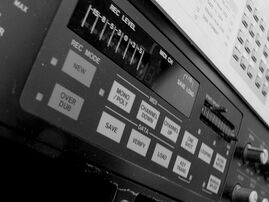 The Akai S950 12-bit rackmount sampler (bottom), prized for its gritty pitching and early jungle break chopping.
-
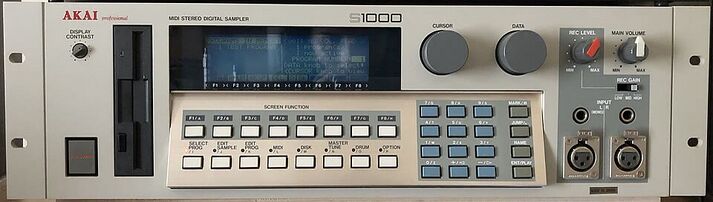 The Akai S1000 16-bit sampler, introducing cyclic time-stretching to UK rave and jungle production.
-
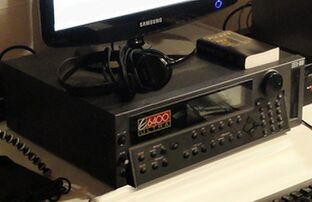 The E-mu E6400 Ultra (E4 series), whose Z-Plane filters shaped dark techstep and Tramen break processing.
-
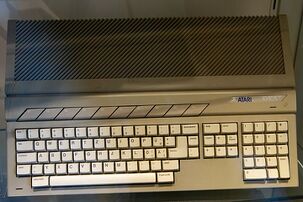 The Atari 1040ST with built-in MIDI ports, sequencing sliced Amen hits via Cubase and Notator.
-
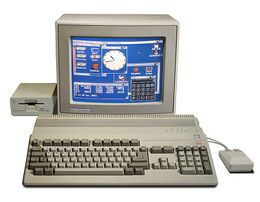 The Commodore Amiga 500 running ProTracker and OctaMED sample-offset tracking.


The Amen break's evolution across electronic genres closely paralleled developments in digital sampling hardware and sequencing software during the late 1980s and 1990s[18]. Initially, hip-hop DJs extended the four-bar solo live by cueing two vinyl copies of the break back and forth on turntables[1][41]. With the adoption of affordable digital samplers in the late 1980s, producers began capturing the passage into RAM and looping it continuously[18].
In the United Kingdom between 1991 and 1995, hardware rack-mount samplers such as the 12-bit Akai S950 and the 16-bit Akai S1000 became central to transforming the break[17][18][42]. Producers frequently paired these units with Atari ST computers running MIDI sequencers such as Steinberg Cubase or C-Lab Creator[15][43]. Recording the Amen break into an S950 at reduced sample rates introduced quantization noise and aliasing artifacts, imparting a crisp, crunchy upper-midrange grit that became closely associated with early jungle percussion[6][42]. Because raising a sample's playback speed on early samplers also raised its pitch, accelerating the Amen break from 136 BPM to 165–175 BPM tightened the snare transient and lifted the ride cymbal into a metallic shimmer[6][8]. Producers also exploited the Akai S950's cyclic time-stretching algorithm—originally intended to alter tempo without changing pitch—to induce deliberate, robotic metallic artifacts on individual snare tails and cymbal hits[17][42].
As breakbeat editing grew more intricate, producers moved beyond whole-bar looping toward "breakbeat chopping"[18][44]. By copying the Amen break across multiple keygroups inside a hardware sampler and adjusting each keygroup's start and end points, producers could trigger isolated kicks, snares, ghost notes, and cymbal slices independently via MIDI, constructing entirely new polyrhythmic patterns while retaining Coleman's original room ambience[18][44]. On home computers such as the Commodore Amiga, producers working in music trackers like ProTracker and OctaMED achieved rapid, non-destructive rearrangement using the hexadecimal sample-offset command (`09xx`), which triggered playback from 256 discrete points along the loaded break waveform without requiring separate sample slots[20][45][46][47]. In 1994, Swedish developer Propellerhead Software released ReCycle, a dedicated loop-slicing utility that automated transient detection and exported sliced `.REX` files alongside matching MIDI timing maps, significantly streamlining Amen break editing across drum and bass studios[16][48][49].
Rather than sampling directly from original 1969 Metromedia pressings, many electronic producers sourced the Amen break through secondary intermediaries[50][51]. Early sample libraries such as Ed Stratton's Zero-G Datafile CD series (1991–1992) circulated unlicensed breakbeats to British bedroom producers, while jungle artists routinely resampled pre-processed Amen loops from other dance records—such as LTJ Bukem's "A Couple of Beats" (1992)—introducing cumulative generational saturation, equalization, and vinyl coloration[50][50][52][53].
Derivative and composite breaks
During the mid-1990s, drum and bass engineers began constructing hybrid percussion loops by layering the Amen break with other funk breaks or entirely replacing its constituent sounds while retaining its rhythmic skeleton[21][54]. Several of these engineered derivatives entered wider circulation as standalone sampled breaks[21][55].
One of the most widely adopted derivatives is the "Tramen" break, a portmanteau combining the name of London DJ and producer DJ Trace with "Amen"[21]. Although associated with Trace—and later nicknamed "Tramen" by producer DJ Fresh—the break was engineered by Dominic Angas (Dom & Roland), who layered the Amen break with James Brown's "Tighten Up" break and the "The Flow" break, driving the composite signal through heavy compression, equalization, and mixing-desk distortion[21]. The Tramen debuted on DJ Trace's 1996 techstep remix "Mutant Revisited" and later appeared unobscured for sixteen bars in the intro of Trace and Dom's 1999 collaboration "Sniper", allowing other producers to lift and resample it directly[21][56].

In 1997, British producer Graham Sutton, recording as Boymerang, created another widely sampled derivative on "Soul Beat Runna"[19][55]. Working inside an E-mu Emulator IV (E4) sampler, Sutton hand-sliced the original Amen break at its native tempo into every constituent hit and micro-flam, sequenced the slices to match Coleman's exact timing, and then replaced every original drum sound with alternative non-Amen samples[19][54]. Left intentionally clean in sections of the arrangement, this "Boymerang break" preserved the swing and syncopated architecture of Coleman's playing while presenting an entirely distinct, punchy acoustic timbre, subsequently sampled by producers including Dillinja on "Silver Blade"[22][54].

History and genre evolution
Rediscovery and early hip-hop (1980–1989)

After remaining largely obscure throughout the 1970s, "Amen, Brother" re-emerged in New York City's underground hip-hop DJ circuit[9][37]. According to producer Louis "BreakBeat Lou" Flores, Bronx DJ Afrika Bambaataa first uncovered the seven-inch single and incorporated its drum solo into party sets around 1980[37][51]. In 1986, Flores and Lenny Roberts ("BreakBeat Lenny") included "Amen, Brother" on the inaugural volume of their influential DJ compilation series Ultimate Breaks and Beats (Street Beat Records, SBR 501)[9][57][58]. When editing the track for the LP, Flores manually slowed the break from 45 RPM down to 33⅓ RPM—briefly dropping its pitch and tempo during the drum solo before returning the rest of the track to normal speed—tailoring it directly for mid-tempo hip-hop mixing and sampling[36][58][59].
Following the release of Ultimate Breaks and Beats SBR 501, East Coast hip-hop producers rapidly integrated the sample into studio recordings[1][39]. Early documented usages in 1986 included Steady B's "Stupid Fresh" (which utilized fragments of the drum intro) and Salt-N-Pepa's "I Desire", produced by Hurby "Luv Bug" Azor on their debut album Hot, Cool & Vicious[39][60][61]. On "I Desire", the slowed Amen break was layered alongside rock drum hits from Aerosmith's "Walk This Way" and synthesizer figures from 7th Wonder's "Daisy Lady"[35][62].
By 1987 and 1988, hip-hop and electro producers began manipulating the break more aggressively rather than merely looping it intact[51][1]. On 2 Live Crew's "Feel Alright Y'all" (1987), Mr. Mixx resequenced segments of the break[51][63]. The following year, Kurtis Mantronik and tape editor Chep Nuñez released Mantronix's instrumental B-side "King of the Beats" (1988), which subjected the Amen break to sharp tape edits, stuttering repeats, and studio processing[1][64][65]. Music historians have noted that "King of the Beats" repositioned the sample as the central compositional focus of a track rather than a passive rhythmic backdrop, crossing over from hip-hop jams into British acid house warehouse parties[1][66].

That same year, the Amen break achieved wide mainstream visibility through West Coast gangsta rap and East Coast club crossovers, notably Rob Base & DJ E-Z Rock's "Keep It Going Now" and N.W.A's title track "Straight Outta Compton" (1988)[1][67]. Produced by Dr. Dre and DJ Yella, "Straight Outta Compton" slowed Coleman's break substantially and reinforced its low end beneath shouted vocal delivery, cementing the sample within late-1980s golden-age hip-hop production[9][24].

Breakbeat hardcore and the emergence of jungle (1990–1995)

Around 1990 and 1991, the Amen break migrated decisively into the United Kingdom's rave underground, where producers fused American house, Belgian techno, hip-hop breakbeats, and British African-Caribbean dub and reggae sound-system traditions[69][40]. Tracks circulated across East London pirate radio stations such as Kool FM and record shops such as De Underground in Forest Gate[70][71]. A pivotal early transition occurred on Lennie De Ice's "We Are I.E."—originally recorded in 1989 and released in 1991 on Reel 2 Reel Productions and I.E. Records—which paired the Amen break with four-on-the-floor acid-house elements, a heavy reggae-derived sub-bass line, Algerian raï vocal samples, vinyl spinbacks, and gunshot sound effects[36][70][72].

Between 1992 and 1994, breakbeat hardcore splintered into jungle, shedding its four-on-the-floor kick drums and accelerating tempos into the 155–170 BPM range while keeping sub-bass lines moving at half-time reggae tempos[25][67][71]. Within jungle, the Amen break served two diverging aesthetic trajectories. On one side, producers associated with LTJ Bukem's Good Looking Records developed an ambient, jazz-inflected style sometimes termed "atmospheric drum and bass" or "intelligent drum and bass" (a label Bukem himself rejected in 1990s interviews)[73][74][16]. On "Music" (1993), Bukem smoothed and re-sequenced the Amen break into a rolling, restrained pulse beneath lush synthesizer chords and swinging double-bass phrases[16][75].

On the harder, club-oriented side of London's jungle scene, labels such as Moving Shadow, Suburban Base, Reinforced, White House, and Renk Records pushed the Amen break into darker and more frenetic territory[15][17][71][26]. In ragga jungle hits such as M-Beat featuring General Levy's "Incredible" (1994) and UK Apachi and Shy FX's "Original Nuttah" (1994), accelerated Amen loops drove rapid dancehall MC patois[11][24][26]. Simultaneously, darkside jungle tracks such as Renegade's "Terrorist" (1994)—produced by Ray Keith with engineering by Nookie—juxtaposed a sombre piano introduction with an abrasive, chopped Amen break and a distorted Reese bassline sampled from Kevin Saunderson[76][77][54].

During 1994 and 1995, South London producer Remarc pushed Amen break programming to extreme levels of rhythmic density on releases such as "Sound Murderer" (1994) and "R.I.P." (1994–1995)[15][26]. Sequencing on an Atari ST, Remarc relentlessly sliced, reversed, stuttered, and chromatically pitched individual snare and cymbal hits up and down the keyboard scale, transforming Coleman's four-bar loop into volatile, rapid-fire percussive solos[15].
Drill 'n' bass, breakcore, and drumfunk (1996–2009)
- Pioneers of extreme Amen break micro-editing in drill 'n' bass and breakcore
-
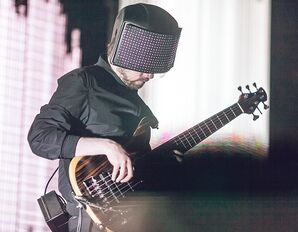 Squarepusher (Tom Jenkinson), whose "Come On My Selector" pushed Amen break slicing to hyper-rapid drill 'n' bass extremes.
-
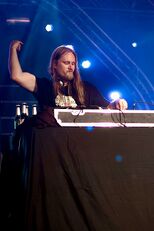 Venetian Snares (Aaron Funk), who re-edited the Amen break into asymmetrical 7/4 meter on "Hajnal" (2005).


By the late 1990s, much of mainstream drum and bass shifted away from raw, unquantized funk breaks toward sleeker, synthesized "two-step" drum patterns popularized by techstep and neurofunk producers[11][78]. Concurrently, experimental electronic musicians outside the club mainstream deconstructed the Amen break even further. Within the British "intelligent dance music" (IDM) and drill 'n' bass movement associated with Warp Records and Rephlex Records, Tom Jenkinson (Squarepusher) paired virtuosic live bass guitar and jazz harmonies with hyper-accelerated, micro-edited Amen programming[12][79]. On "Come On My Selector" (1997), taken from his Big Loada EP, Jenkinson subjected the break to erratic tempo shifts, rapid-fire glitch retriggering, and abrupt filter cuts that defied conventional club mixing[12][79][80].

During the early-to-mid-2000s, a counter-movement within UK drum and bass—referred to as "drumfunk" or "choppage"—sought to revive the raw, long-form breakbeat editing of 1993–1994 jungle[14][26][81]. Championed at London club nights such as Technicality and on independent labels including Outsider, Inperspective Records, Bassbin, and Paradox Music, artists such as Paradox, Equinox, Breakage, Fanu, and Fracture & Neptune built minimalist arrangements focused squarely on intricate, unquantized drum edits[14][26][81]. On "Colemanism" (2004), explicitly titled in homage to Gregory Coleman, Fracture & Neptune went beyond the seven-second solo to sample the horn stabs and bass licks from the rest of "Amen, Brother", weaving them around intricate, heavily chopped Amen permutations[14][81][82][83].

Simultaneously, the breakcore scene pushed the Amen break past 200 BPM into abrasive noise, hardcore punk, and avant-garde collage contexts[10][43]. Canadian producer Aaron Funk, recording as Venetian Snares, frequently programmed the Amen break using computer trackers to force its 4/4 funk accents into asymmetrical time signatures such as 7/4[79][85][86]. On "Hajnal" from his 2005 album Rossz Csillag Alatt Született, Funk transitioned from a melancholic classical orchestral opening into densely distorted, irregular-meter Amen break barrages[12][85][87][88].

Mainstream crossover and multi-media adoption (1997–2010s)

By the late 1990s, the Amen break had moved well beyond hip-hop and club subcultures, entering alternative rock, nu-metal, mainstream pop, television themes, and commercial advertising—often via second-generation sampling from jungle records or commercial sample CDs[51][89]. In 1997, David Bowie incorporated a jungle-derived Amen break (sourced via Omni Trio's "Renegade Snares") as the rhythmic engine of "Little Wonder", the lead single from his album Earthling[13][51][68]. That same year, British rock band Oasis layered a heavily processed Amen break beneath dense walls of distorted electric guitars on "D'You Know What I Mean?"[51][90].

Heavy metal and nu-metal acts similarly adopted the sample; Slipknot opened their 1999 track "Eyeless" with a rapid, frantic Amen break loop before erupting into downtuned guitars and live blast beats[51][68]. In broadcast television, composer Christopher Tyng used a pitched-down version of the Amen break to anchor the theme music for the animated series Futurama (1999), while an accelerated breakbeat adaptation served as the theme for The Powerpuff Girls[68][90][51]. Throughout the 2000s and 2010s, the break continued appearing across pop, hip-hop, and bass music, from Amy Winehouse's "You Know I'm No Good" and Tyler, the Creator's "Pigs" to film trailers and video game soundtracks[68][91][11].
2020s revival and contemporary usage (2020–2026)

During the early and mid-2020s, a broad international revival of 1990s jungle, atmospheric drum and bass, and online breakcore brought the Amen break back to the forefront of electronic production[43][92][78]. British producers and labels—including Tim Reaper's Future Retro imprint, Fracture's Astrophonica, Sully, Coco Bryce, and Nia Archives—combined historical breakbeat chopping techniques with contemporary digital audio workstations (DAWs) and software emulations of 1990s hardware samplers[49][76][92][78][93]. Pop artists such as PinkPantheress integrated lo-fi, accelerated jungle breakbeats into short-form streaming hits, while underground techno-adjacent producers fused Amen cuts with ambient electronics[43][94]. On "Testo BC Mashup" from his 2021 album Pool, Munich-based producer Skee Mask contrasted stark, dark ambient synthesizer textures with splintered, snare-heavy Amen chops[94].

Copyright, royalties, and cultural reception

Despite the Amen break's ubiquity, none of the Winstons' members received mechanical or master-recording royalties from its sampling[1][95]. Richard Lewis Spencer, who held the copyright to "Amen, Brother", left the music industry in 1970 to pursue higher education and later worked for the Washington Metropolitan Area Transit Authority[27][37][96]. Spencer remained unaware of the break's cultural footprint until 1996, when a British music executive contacted him inquiring about the original master tape[27][91]. By that time, the 36-month United States statute of limitations for pursuing copyright infringement claims had elapsed for many of the most commercially lucrative 1980s and early-1990s usages, and Spencer lacked the financial resources to litigate against major record labels[1][28][91]. Gregory Coleman died homeless and destitute in 2006; Spencer stated in interviews that it was unlikely Coleman ever understood the scale of his drumming's influence on global music[1][27].
In 2004, American artist and scholar Nate Harrison released Can I Get an Amen?, an eighteen-minute audio-visual installation and essay that traced the history of the Amen break from 1969 through hip-hop, jungle, and corporate advertising[29][89]. Harrison examined the paradox of intellectual property law surrounding the sample: while strict copyright enforcement following cases such as Grand Upright Music, Ltd. v. Warner Bros. Records Inc. (1991) curtailed unlicensed sampling in mainstream hip-hop, the Amen break functioned in practice as an unlicensed public commons whose free circulation catalyzed entire musical genres[29][89][97]. Music journalists and critics also debated the aesthetic consequences of the break's ubiquity; in 2003, after critic Douglas Wolk dismissed reliance on the Amen break as a creative fallback, music critic Simon Reynolds defended it as "jungle's highest common denominator," likening its foundational structural function to the Bo Diddley beat or the twelve-bar blues shuffle[81].
Spencer's own public statements regarding the unlicensed use of his band's recording shifted over time[1][27]. In a 2011 BBC interview, he condemned the practice as plagiarism, stating that Coleman's "heart and soul went into that drum break" while others copied it and earned millions[27][91]. By 2015, however, Spencer expressed a more ambivalent appreciation, remarking that as a Black musician in America, having generations of artists draw upon something he helped create was also "flattering"[27]. In early 2015, British breakbeat DJs Martyn Webster and Steve Theobald launched a GoFundMe crowdfunding campaign aimed at compensating Spencer directly[98][99]. Surpassing its initial £1,000 goal, the campaign raised £24,000 (approximately US$37,000), which was delivered to Spencer in November 2015[27][28][99]. Legal commentators later noted that while the fundraiser offered symbolic recognition, it did not constitute institutional remuneration from the publishers and labels that had profited from the sample, nor could it reach Coleman[29]. Spencer died on December 27, 2020[27][32].
By March 2018, Guinness World Records recognized "Amen, Brother" as the most sampled track in recorded music history based on 2,835 documented uses; by early 2026, user-curated databases such as WhoSampled cataloged well over 6,000 to 7,000 distinct appearances[13][33][90]. On May 14, 2026, the United States Library of Congress formally inducted "Amen, Brother" into the National Recording Registry, preserving the 1969 single in recognition of the break's foundational role in late-twentieth- and twenty-first-century rhythm and electronic music production[25][30][33].
See also
Bibliography
- Library of Congress, National Recording Preservation Board (May 14, 2026). "2026 National Recording Registry Inductees" and "Complete National Recording Registry Listing."[30][31][100]
- Wikipedia contributors. "Amen break", "Color Him Father", "Richard Lewis Spencer", "Ultimate Breaks and Beats", "We Are I.E.", and "Jungle music."[1][4][5][26][32][70]
- Financial Times / Music Journalism Archive (April 12, 2020). "The Amen Break — how an obscure 1960s B-side became the most sampled song in history."[9]
- Harrison, Nate (2004). Can I Get an Amen? (Audio-visual installation and essay), cited in Artistic License: The Philosophical Problems of Copyright and Appropriation.[29][89]
- James, Martin. State of Bass: The Origins of Jungle/Drum & Bass.[75][75]
- Belle-Fortune, Brian (2004). All Crews: Journeys Through Jungle / Drum & Bass Culture.[17][101]
- Beaumont-Thomas, Ben (December 11, 2024). "Lennie De Ice, British producer who pioneered sound of jungle, has died." The Guardian.[72]
- Shepherd, Jack (November 11, 2015). "Frontman of The Winstons finally paid for Amen Break drum sample." The Independent.[98]
- Helman, Peter (November 11, 2015). "Musician Behind Iconic 'Amen' Break Finally Gets Paid." Stereogum.[99]
- Wax Poetics (February 7, 2021). "Building Blocks: Ultimate Breaks & Beats."[58]
- Reynolds, Simon (September 2003). "Amen Brotherhood." Blissblog.[81]
- Reverb (July 28, 2020). "The Samplers and Breakbeats Behind '90s Jungle/Drum & Bass."[17]
- MusicRadar (January 5, 2021). "The beginner's guide to: breakbeat."[18]
- Discogs database entries for The Winstons – Color Him Father / Amen, Brother (Metromedia MMS-117, 1969), Ultimate Breaks & Beats (Street Beat SBR 501, 1986), Mantronix – Join Me Please... / King of the Beats (Capitol V-15386, 1988), Zero-G – Datafile One (1991), Renegade – Terrorist (Moving Shadow SHADOW 45, 1994), and Paradox v Fracture + Neptune – Colemanism / Skull Minded (Outsider OUTSIDER 003, 2004).[52][57][65][77][84][102]
- DnB 365 (February 8, 2013). "DJ Trace – Mutant Revisited" (quoting DJ Trace interview with Drum&BassArena, 2004).[21]
- UKF (December 11, 2018). "Forever in flipmode: An Astrophonic conversation with Fracture."[82]
- Kidd, Andrew C., and Ross Perry (May 23, 2023). "ESSAY: Amen: preservation, revisionism and revivalism of jungle and drum n' bass music." Monolith Cocktail.[78][94][94]
References
- ↑ 1.00 1.01 1.02 1.03 1.04 1.05 1.06 1.07 1.08 1.09 1.10 1.11 1.12 1.13 1.14 1.15 1.16 1.17 1.18 1.19 1.20 1.21 1.22 1.23 1.24 1.25 1.26 1.27 1.28 1.29 1.30 1.31 1.32 1.33 1.34 1.35 1.36 Amen break - Wikipedia
- ↑ 2.0 2.1 2.2 2.3 2.4 2.5 2.6 2.7 Amen Brother - by Dubmatix - Bass Culture Music Magazine
- ↑ 3.0 3.1 3.2 3.3 3.4 The Winstons - Color Him Father (Vinyl) : The Winstons : Free Download, Borrow, and Streaming : Internet Archive
- ↑ 4.0 4.1 4.2 4.3 Ultimate Breaks and Beats - Wikipedia
- ↑ 5.0 5.1 5.2 5.3 Color Him Father - Wikipedia
- ↑ 6.0 6.1 6.2 6.3 Jungle drum machine: breaks, samplers and drum & bass
- ↑ 7.0 7.1 7.2 The Amen Break: History of a Famous Drum Loop – Amens
- ↑ 8.0 8.1 8.2 8.3 8.4 Drum & Bass Ghost Producer Tracks – EDM Ghost Production
- ↑ 9.00 9.01 9.02 9.03 9.04 9.05 9.06 9.07 9.08 9.09 9.10 9.11 9.12 The Amen Break — how an obscure 1960s B-side became the most sampled song in history — FT.com
- ↑ 10.0 10.1 Certain songs can be identified by a simple drum snare pattern Kick Kick Snare Besides Queens We Will Rock You what is your favorite and why (quora.com)
- ↑ 11.0 11.1 11.2 11.3 The Amen Odyssey: How a Seven-Second Drum Solo Accidentally Engineered Modern Music and Created Jungle and Drum & Bass – Part Three of Th...
- ↑ 12.0 12.1 12.2 12.3 12.4 What Is Breakcore Music? 15 Essential Songs and Artists for Beginners - RouteNote - Radar
- ↑ 13.0 13.1 13.2 13.3 An Ode to the Amen Break - by Stevie B
- ↑ 14.0 14.1 14.2 14.3 14.4 Fanu’s Breaks ‘n’ Beats Podcast # 2 – Fanumusic.com
- ↑ 15.0 15.1 15.2 15.3 15.4 15.5 A Remarc of obsession - saluting the Amen king
- ↑ 16.0 16.1 16.2 16.3 16.4 an ethnographic and technological study of breakbeats (raw.githubusercontent.com)
- ↑ 17.0 17.1 17.2 17.3 17.4 17.5 17.6 the samplers behind 90s jungle and drum and bass (reverb.com)
- ↑ 18.0 18.1 18.2 18.3 18.4 18.5 18.6 The beginner's guide to: breakbeat – MusicRadar
- ↑ 19.0 19.1 19.2 19.3 Bungle — Ambient and electronica music blog and mixes — A STRANGELY ISOLATED PLACE
- ↑ 20.0 20.1 Change Pitch Without Retrigger Sample? - Beginners Questions - Renoise - Renoise Forums
- ↑ 21.0 21.1 21.2 21.3 21.4 21.5 21.6 21.7 DJ Trace – Mutant Revisited
- ↑ 22.0 22.1 DJ Magazine 70 2009 UK – PDF – Electronic Music – Entertainment (General)
- ↑ Celebrating 50 Years of the Amen Break
- ↑ 24.0 24.1 24.2 The Amen Break
- ↑ 25.0 25.1 25.2 Drum and Bass History: From Jungle to D&B – EDM Ghost Production
- ↑ 26.0 26.1 26.2 26.3 26.4 26.5 26.6 Jungle music - Wikipedia
- ↑ 27.00 27.01 27.02 27.03 27.04 27.05 27.06 27.07 27.08 27.09 amen break (reddit.com)
- ↑ 28.0 28.1 28.2 amen break musician finally gets paid (digitalmusicnews.com)
- ↑ 29.0 29.1 29.2 29.3 29.4 Artistic License: The Philosophical Problems of Copyright and Appropriation 9780226460383 - DOKUMEN.PUB
- ↑ 30.0 30.1 30.2 Library of Congress – National Recording Registry (2026)
- ↑ 31.0 31.1 registry by induction year (loc.gov)
- ↑ 32.0 32.1 32.2 Richard Lewis Spencer - Wikipedia
- ↑ 33.0 33.1 33.2 33.3 33.4 33.5 33.6 What Is the Amen Break? The Most Sampled Drum Solo Ever
- ↑ watch (youtube.com)
- ↑ 35.0 35.1 Amen break listening guide – The Ethan Hein Blog
- ↑ 36.0 36.1 36.2 Lennie De Ice – We Are i.e.
- ↑ 37.0 37.1 37.2 37.3 37.4 The Winstons' Amen Break, six seconds from 1969 · Rogue
- ↑ watch (youtube.com)
- ↑ 39.0 39.1 39.2 39.3 39.4 39.5 39.6 viewcontent.cgi (digitalcommons.csumb.edu)
- ↑ 40.0 40.1 ravepreservationproject.com
- ↑ The most sampled song in history is one you’ve never heard of – 7NEWS
- ↑ 42.0 42.1 42.2 How to Chop and Process Breaks for an Authentic Jungle Sound by Sample Market UK
- ↑ 43.0 43.1 43.2 43.3 What Is Jungle Music? Breakbeats, BPM, and Drum & Bass – Orphiq
- ↑ 44.0 44.1 How to Chop Breakbeats and the Amen Break With BR3AK – TPS
- ↑ Usefullness Of 09xx Offset Command? - Beginners Questions - Renoise - Renoise Forums
- ↑ 9xx - General Discussion - Renoise Forums
- ↑ Breakcore Rinse Technique Xrns - Tips & Tricks - Renoise Forums
- ↑ Ultimate Guide To Ableton Live – PDF – Synthesizer – Sound Technology
- ↑ 49.0 49.1 Jungle 101: The Beat – Reason Studios
- ↑ 50.0 50.1 50.2 where did 90s jungle producers get their samples (reddit.com)
- ↑ 51.00 51.01 51.02 51.03 51.04 51.05 51.06 51.07 51.08 51.09 Rain City Drummer: 2019
- ↑ 52.0 52.1 Zero G Datafile One (Discogs)
- ↑ Datafiles
- ↑ 54.0 54.1 54.2 54.3 54.4 What is Jungle Music? – The Evolution of Drum and Bass
- ↑ 55.0 55.1 55.2 boymerang soul beat runna video (urbanocturnal.org)
- ↑ Tramen – VK
- ↑ 57.0 57.1 Various Ultimate Breaks Beats (Discogs)
- ↑ 58.0 58.1 58.2 Building Blocks: Ultimate Breaks & Beats
- ↑ The Winstons – Amen Brother – DJ Okkie
- ↑ The Amen Break – Bad Music Math
- ↑ 61.0 61.1 Amen, Brother! – VK
- ↑ The Amen Break – The Ethan Hein Blog
- ↑ amen break most sampled loop in history video (hypebeast.com)
- ↑ 64.0 64.1 Mantronix Join Me Please Home Boys Make Some Noise (Discogs)
- ↑ 65.0 65.1 65.2 Mantronix Join Me Please Home Boys Make Some Noise (Discogs)
- ↑ 406582 (Discogs)
- ↑ 67.0 67.1 What Is Breakbeat? Genre, History, Artists & Styles
- ↑ 68.0 68.1 68.2 68.3 68.4 68.5 watch (youtube.com)
- ↑ A history of Jungle: the 'people's music' - B-Mag - B-Mag
- ↑ 70.0 70.1 70.2 70.3 We Are I.E. - Wikipedia
- ↑ 71.0 71.1 71.2 Jungle and drum and bass: how one scene became two names – D-N-B.co.uk
- ↑ 72.0 72.1 lennie de ice british producer jungle has died (theguardian.com)
- ↑ Drum n Bass Styles Explained: Jungle, Liquid, Jump-Up, Techstep and Ne
- ↑ jungle history (jungledrumandbass.co.uk)
- ↑ 75.0 75.1 75.2 State of Bass: The Origins of Jungle/Drum & Bass 9781913231026 - DOKUMEN.PUB
- ↑ 76.0 76.1 What Is Jungle Music? History, Sound & Essential Tracks
- ↑ 77.0 77.1 77.2 The Renegade Featuring Ray Keith Terrorist Something I Feel (Discogs)
- ↑ 78.0 78.1 78.2 78.3 May – 2023 – Monolith Cocktail Blog
- ↑ 79.0 79.1 79.2 AmenBreak (tvtropes.org)
- ↑ 80.0 80.1 80.2 muniak.com - feedback_loop
- ↑ 81.0 81.1 81.2 81.3 81.4 blissblog: 09/01/2003 - 10/01/2003
- ↑ 82.0 82.1 Forever in flipmode: An Astrophonic conversation with Fracture • UKF
- ↑ 83.0 83.1 Fracture Neptune Paradox Colemanism Skull Minded (Discogs)
- ↑ 84.0 84.1 Paradox V Fracture Neptune Colemanism Skull Minded (Discogs)
- ↑ 85.0 85.1 Venetian Snares: Breakcore, Uneven Metres and Rossz Csillag Alatt Született - Frequency State
- ↑ learning renoise (reddit.com)
- ↑ 87.0 87.1 Amplitudes - Radio Campus Paris
- ↑ Venetian Snares — Rossz csillag alatt született — Guts of Darkness
- ↑ 89.0 89.1 89.2 89.3 O.Henry Magazine (February 2016) – Issuu
- ↑ 90.0 90.1 90.2 the most sampled song of all time (playlistideas.com)
- ↑ 91.0 91.1 91.2 91.3 AMEN BREAK — MUSE Magazine
- ↑ 92.0 92.1 UK Electronic Music Evolution: Genres, Scenes and History
- ↑ Beatport’s Definitive History of Drum & Bass
- ↑ 94.0 94.1 94.2 94.3 94.4 ESSAY: Amen: preservation, revisionism and revivalism of jungle and drum n’ bass music – Monolith Cocktail Blog
- ↑ The Amen Break's Retroactive Fundraiser - DJ TechTools
- ↑ 46 年後,著名的 「Amen Break 」發明者終於拿到他的版權費 – ROXY ROCKER 搖滾客
- ↑ of the most famous hip hop samples ever used (sweetwater.com)
- ↑ 98.0 98.1 Frontman of The Winstons finally paid for Amen Break drum sample – The Independent – The Independent
- ↑ 99.0 99.1 99.2 Musician Behind Iconic "Amen" Break Finally Gets Paid
- ↑ complete national recording registry listing (loc.gov)
- ↑ All Crews: Journeys Through Jungle / Drum & Bass Culture 0954889703, 9780954889708 - DOKUMEN.PUB
- ↑ The Winstons Color Him Father Amen Brother (Discogs)