
Breakbeat hardcore
More actions
| Breakbeat hardcore | |
|---|---|
| Stylistic origins | Acid house, hip-hop, techno (bleep techno, Belgian techno, Detroit techno), reggae, dub, dancehall, rare groove, new beat[1][2][3][4] |
| Cultural origins | Late 1980s–early 1990s; United Kingdom (primarily London, Essex, Hertfordshire, the Midlands, and Northern England)[1][5][6][7][8] |
| Typical BPM range | 130–160 BPM[9][10] |
| Typical instruments / hardware / software | Hardware samplers (Akai S950, Akai S1000, Casio FZ-1, Akai MPC60), Atari ST (Cubase), Commodore Amiga (MED, OctaMED), synthesizers (Roland Alpha Juno, Roland SH-101, Roland W-30, Korg M1), drum machines (Roland TR-808, TR-909), turntables[11][12][13][14][15] |
| Key sonic traits | Sped-up and chopped funk/hip-hop breakbeats, heavy sub-bass, four-on-the-floor kick drums, Hoover/Mentasm synth riffs, rave chord stabs, house piano breakdowns, pitch-shifted vocals, time-stretching artifacts[16][17][18][19] |
| Subgenres | Darkcore, breakbeat happy hardcore[16][9][20] |
| Derivative forms | Jungle, drum and bass, happy hardcore (4-beat), UK garage, big beat, breakcore, hardcore breaks[1][16][21][22] |
| Notable labels / scenes | Reinforced Records, Moving Shadow, Suburban Base, XL Recordings, Shut Up and Dance Records, Production House, Formation Records, Network Records, Awesome Records; UK rave scene; London pirate radio (Kool FM, Rush FM)[23][24][25][26][27][28][29][7][8] |
Breakbeat hardcore—also known retroactively as oldskool hardcore or hardcore rave, and referred to contemporaneously in the early 1990s simply as hardcore or 'ardkore—is a genre of British electronic dance music that emerged from the United Kingdom rave scene between 1990 and 1993[1][5][16][30]. It combined the four-on-the-floor rhythmic drive and synthesizer textures of acid house and European techno with sped-up, chopped hip-hop and funk breakbeats, heavy dub-influenced sub-bass, house piano riffs, and eclectic vocal sampling[16][2][4]. Produced predominantly in bedroom studios and small independent facilities using affordable hardware samplers and personal computers, the genre served as the primary soundtrack to large-scale British warehouse parties, open-air raves, and pirate radio broadcasts during the early 1990s[1][31][15].
Originating in multicultural urban and suburban networks across London, the Home Counties, the Midlands, and Northern England, breakbeat hardcore drew directly upon Britain's sound system heritage, Caribbean diaspora musical traditions, and 1980s electro and rare groove scenes[1][32][4][33]. Between 1991 and 1992, several acts associated with the style—including The Prodigy, SL2, Altern 8, and Shut Up and Dance—achieved commercial crossover success on the UK Singles Chart, prompting both heightened media attention and internal debates within the dance music press regarding commercialization[25][26][34][35].
By late 1992 and 1993, stylistic, tempos, and cultural divisions caused the unified rave sound to fracture into distinct movements[1][16][4]. One branch accelerated and darkened the sound, abandoning uplifting house pianos in favor of complex percussion edits, sinister atmospheres, and reggae basslines to form darkcore, jungle, and drum and bass; another retained euphoric piano melodies and pitched vocals while moving toward rapid four-on-the-floor kick drums, giving rise to happy hardcore[16][9][4][36]. Music critic Simon Reynolds later identified breakbeat hardcore as the foundational point of the "hardcore continuum," a lineage of interrelated British underground dance genres extending through jungle, UK garage, grime, and dubstep[1][37][22].
Etymology and terminology
During its active peak between 1990 and 1993, producers, DJs, and journalists rarely used the compound label "breakbeat hardcore"[16][30]. Instead, the music was commonly described as "hardcore," "hardcore techno," "breakbeat house," or simply "rave"[30]. In the late 1980s UK club landscape, the term "hardcore" initially served to distinguish raw, fast, underground warehouse tracks from commercial pop-house and Balearic styles[31][38]. Because British dance music mutated rapidly across a short span of years, terminology remained fluid; Simon Reynolds noted that over roughly three years in the early 1990s, labels such as "breakbeat house," "hardcore techno," "'ardkore," "jungle techno," "darkside," and "jungle" circulated concurrently and overlapped in pirate radio chatter and record-shop classifications[30].
The phonetic spelling "'ardkore" (reflecting Estuary English and Cockney H-dropping) was popularized in British music journalism—particularly in Melody Maker essays written by Reynolds in 1992—to convey the vernacular, working-class, and London-centered character of the UK breakbeat movement[39][40]. By the mid-1990s, as European mainland scenes developed four-on-the-floor distorted-kick genres such as Dutch gabber and German hardcore techno, and as British happy hardcore increasingly shed breakbeats in favor of straight 4/4 beats, historians, compilers, and record collectors adopted the retrospective terms "breakbeat hardcore" and "oldskool hardcore" to specify the 1990–1993 UK breakbeat-driven rave style[16][21][36].
Musical characteristics and production
Rhythm and tempo
Breakbeat hardcore is defined rhythmically by the combination of accelerated, sampled drum loops ("breakbeats") with electronic dance percussion[1][16]. Tempos escalated rapidly across the genre's lifespan: early transitional records in 1990 and 1991 typically sat between 125 and 135 BPM, whereas peak-era productions in 1992 and early 1993 regularly pushed into the 140–160 BPM range[9][10]. Rather than relying solely on quantized drum-machine patterns, producers sampled four-bar or two-bar drum solos from 1960s and 1970s funk and soul recordings—such as The Winstons' "Amen, Brother" (1969), Lyn Collins's "Think (About It)," James Brown's "Funky Drummer," and Bobby Byrd's "Hot Pants"—as well as 1980s hip-hop records that had already processed those breaks[1][41][33][42].
Because early hardware samplers lacked transparent pitch-independent tempo adjustment, speeding a 100–115 BPM funk breakbeat up to 140–155 BPM raised its pitch substantially, tightening the snare decay and producing a brittle, high-energy percussive texture[17]. In early breakbeat hardcore, producers frequently layered a sampled breakbeat directly over a four-on-the-floor Roland TR-909 or TR-808 kick drum to maintain compatibility with house and techno DJ mixes[43][13]. Increasingly from late 1991 onward, producers began slicing sampled breaks into individual drum hits or short rhythmic cells and re-sequencing them to create syncopated, stuttering patterns that diverged from the original drummer's groove[44][45]. This technique of breakbeat chopping became a hallmark of Moving Shadow releases such as 2 Bad Mice's "Bombscare," which rearranged sampled percussion from Kariya's "Let Me Love You (Rebuilt)" into interlocking, syncopated phrasing against staccato synth stabs[44][46].

Producers who lacked dedicated rack samplers achieved similarly frantic, micro-edited drum programming on home computers, most notably the Commodore Amiga running tracker software such as MED and OctaMED[4][15]. Trackers displayed musical events vertically in columns and allowed instant sample triggering, pitch shifts, and retriggers on every subdivision, yielding crisp, quantized, and occasionally phase-shifted rhythmic patterns[49][15]. Urban Shakedown's "Some Justice" (1991), created by Gavin King (later known as Aphrodite) and Claudio Giussani with Micky Finn, demonstrated the rhythmic capabilities of Amiga tracker production; Amiga Format highlighted the record in August 1992 as one of the first commercial British dance hits produced entirely on a personal computer[50][15].

Instrumentation, sampling, and sound design
- Classic studio hardware of 1990–1993 UK breakbeat hardcore
-
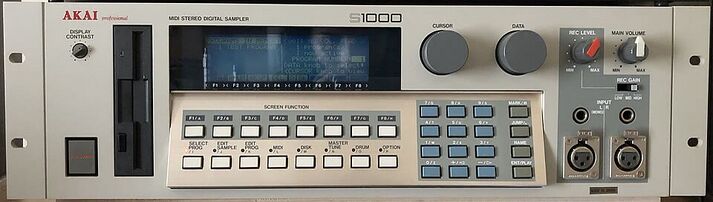 The Akai S1000 sampler, central to breakbeat pitching, chopping, and time-stretching.
-
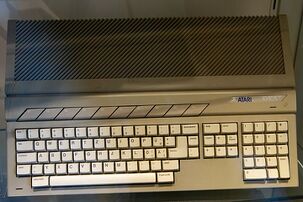 The Atari 1040ST computer running MIDI sequencers like Steinberg Cubase.
-
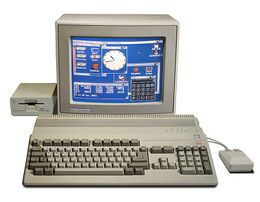 The Commodore Amiga 500 running MED and OctaMED trackers (used on tracks like "Some Justice").
-
 The Korg M1 workstation, source of the bright house piano chords heard across 1991–1992 rave anthems.
-
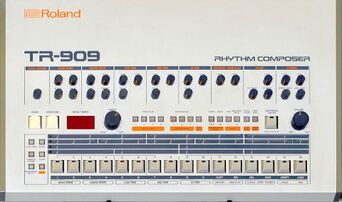 The Roland TR-909 drum machine, providing four-on-the-floor kicks layered beneath sampled breakbeats.
-
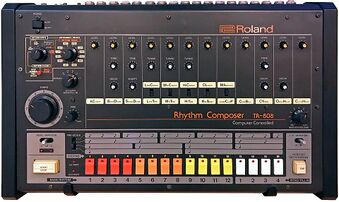 The Roland TR-808, source of booming sub-bass kicks.


The sonic palette of breakbeat hardcore was shaped directly by the technical limitations and creative repurposing of late-1980s and early-1990s studio hardware[17][15]. A typical independent studio revolved around an Atari ST computer running MIDI sequencing software such as Steinberg Cubase connected to a 12-bit or 16-bit hardware sampler—principally the Akai S950, Akai S1000, Casio FZ-1, or Akai MPC60—alongside budget analog or digital synthesizers, basic mixing desks, and effects units like the Alesis Quadraverb[11][12][13][14]. Some bedroom producers worked with remarkably minimal configurations; as documented in The Cambridge Companion to Electronic Dance Music, North London producer DJ Seduction created early 1992 hardcore tracks such as "Sub Dub" and "Drop the Bass" using only an Akai S950 sampler, a Roland JD-800 synthesizer, and a four-track mixer, triggering layered breakbeats in real time without owning a dedicated drum machine[15].
Timbrally, breakbeat hardcore relied heavily on recognizable synthesized motifs imported from Belgian techno, Detroit techno, Chicago house, and Italian piano house[16][12][3]. Foremost among these was the "Hoover" or "Mentasm" sound: a thick, pitch-modulating, chorus-heavy texture originating from factory preset 86 ("What the?") programmed by Eric Persing for the Roland Alpha Juno synthesizer (1985) using pulse-width modulated oscillators[12][52]. New York producers Joey Beltram and Edmundo Perez (Mundo Muzique), recording as Second Phase, sampled the patch into a Casio FZ-1 for their 1991 R&S Records single "Mentasm," and Dutch group Human Resource featured a similar patch on "Dominator" later the same year[12][53]. British hardcore producers sampled the "Mentasm" riff directly off vinyl and re-triggered it at high tempos, turning it into a staple timbral signifier across hundreds of 1991–1992 rave records[18][52].

Alongside aggressive Belgian-derived stabs and bass tones—including the detuned, phase-distorted "Reese bass" first synthesized by Kevin Saunderson on a Casio CZ-1000 for his 1988 Incognito Records track "Just Want Another Chance"[55]—breakbeat hardcore incorporated sub-heavy basslines modeled on Jamaican dub sound systems and Roland TR-808 sine-wave booms[1][16][4]. Counterbalancing these abrasive low- and mid-range textures were bright, euphoric chord progressions played on digital workstations such as the Korg M1 (particularly its bright acoustic piano preset) or sampled from Italian house and disco records, paired with diva vocals pitched upward to match the fast tempo[16][19][14]. Marc Mac's solo project Manix exemplified this synthesis on "Feel Real Good" (1991), fusing uplifting house piano chords and soulful vocal hooks with bleep-techno bass weight and clipped hardcore breakbeats[56][57][19].

Arrangement and structure
Unlike the gradual, hypnotic layering of Chicago house or Detroit techno, breakbeat hardcore favored abrupt, collagist arrangements designed to generate sharp peaks of tension and release on large rave sound systems[59][40]. Critics such as Simon Reynolds characterized early 1990s "'ardkore" tracks as dense, hyperactive concatenations of disparate samples—combining science-fiction film dialogue, reggae toasting, dub sirens, pitched-up female soul vocals, orchestral hits, and discordant techno riffs within a single five-minute arrangement[24][59]. Tracks frequently opened with sparse percussive DJ intros or atmospheric breakdowns before dropping suddenly into full breakbeats and bass, then cutting out abruptly into a piano or vocal interlude to provoke crowd response[59][60].
Because sampler memory in machines like the Akai S950 and Roland W-30 was severely restricted, producers relied on short, looping fragments and rapid structural switches to sustain momentum without exhausting RAM[11][15]. West London producer Acen Razvi pushed this maximalist collage approach to dramatic extremes in his 1992 Trip II the Moon single series for Production House[24][32]. Constructed on an Akai MPC60 and Roland W-30, "Trip II the Moon (Part 2)" juxtaposed replayed orchestral strings from John Barry's James Bond theme "You Only Live Twice" (1967) with piano chords from The Rolling Stones' "She's a Rainbow," pitched-up house vocals from Tongue 'n' Cheek, ragga vocal shouts from Daddy Freddy, Belgian synth stabs from 80 Aum's "Mindcontroller," and rapid breakbeat shifts[24][11].

History and evolution
Precursors (1988–1990)
Breakbeat hardcore emerged from the convergence of several distinct musical movements circulating in the United Kingdom during the late 1980s[1][32]. Following the 1988 "Second Summer of Love," Chicago acid house and Detroit techno became embedded in British club and warehouse party culture[1][61]. Simultaneously, British producers and DJs steeped in 1980s hip-hop, electro, rare groove, and Caribbean reggae sound system traditions began infusing four-on-the-floor house templates with sampled drum breaks and heavy sub-bass[1][62][32][33].
In Northern England, particularly in Sheffield, Leeds, and Bradford, the bleep techno (or "bleep 'n' bass") movement pioneered an austere fusion of minimal electronic pulses, Roland TR-808 bass booms, and sound system sub-frequencies[23][63][64]. Records such as Unique 3's "The Theme" (1989) on 10 Records, along with early Warp Records releases by LFO and Nightmares on Wax, established sub-bass pressure as a defining physical element of British dance floors[23][63][65]. Concurrently, industrial-electronic group Meat Beat Manifesto released "Helter Skelter" / "Radio Babylon" (1990), whose dub-soaked, heavy breakbeat loop (derived from Bobby Byrd's "Hot Pants") was widely sampled by first-wave UK hardcore producers[43][42].
In London, former sound system operators and hip-hop enthusiasts actively merged rap breakbeats with house tempos[62][33]. Stoke Newington duo Shut Up and Dance—Philip "PJ" Johnson and Carlton "Smiley" Hyman, veterans of the Heatwave sound system—founded Shut Up and Dance Records and charted in 1990 with "£10 to Get In" and "Lamborghini"[25][33]. "£10 to Get In" layered fast hip-hop percussion over acid house synth lines (sampling Ten City's "That's the Way Love Is") and a recognizable humming loop from Suzanne Vega's "Tom's Diner," providing an early blueprint for sample-driven UK breakbeat dance music[66]. The duo also produced early singles for the Ragga Twins, directly introducing Jamaican dancehall MC vocals into rave breakbeats[25][67].
A pivotal turning point arrived in October 1990 with "Mr. Kirk's Nightmare" by Dollis Hill collective 4hero (Marc Mac, Dego, Gus Lawrence, and Iain Bardouille), released on their independent label Reinforced Records as part of the Combat Dancin' EP[62][23]. Drawing on the members' background in North West London sound systems and the Strong Island FM pirate station, the track combined Yorkshire bleep-style sub-bass pressure and edgy synth stabs with mid-tempo hip-hop breakbeats (drawing on Lyn Collins's "Think," Tommy Roe's "Sweet Pea," and the Isley Brothers) and a stark spoken-word sample from Think's 1971 anti-drug record "Once You Understand" informing a father of his son's overdose[62][23][69][70][33]. Reportedly selling over 24,000 copies, "Mr. Kirk's Nightmare" demonstrated that breakbeat-centered, sample-heavy tracks with grim themes could command British rave floors[71][69].

Emergence and mainstream crossover (1991–1992)

By 1991, the disparate strands of acid house, Belgian techno stabs, bleep sub-bass, hip-hop breaks, and reggae sound system aesthetics coalesced rapidly into breakbeat hardcore[73][1][74]. A network of independent labels—including XL Recordings, Moving Shadow, Suburban Base, Reinforced Records, Production House, and Formation Records—began releasing 12-inch white-label promos and commercial singles tailored to rapidly expanding weekend raves[69][24][75][29][7][8]. Tempos climbed steadily as DJs routinely pitched 33⅓ RPM records upward—or occasionally played slower tracks at 45 RPM—to heighten dance-floor intensity[76][77].
In August 1991, Essex producer Liam Howlett, recording as The Prodigy on XL Recordings, released "Charly" (promoted primarily via its "Alley Cat Mix"), which paired "Mentasm"-inspired synth riffs and the breakbeat from Meat Beat Manifesto's "Radio Babylon" with vocal samples from a 1970s British public information film featuring a cartoon cat voiced by Kenny Everett[78][79][80][81]. Reaching No. 3 on the UK Singles Chart, "Charly" initiated a wave of mainstream chart entries for breakbeat hardcore[78][82]. Throughout 1992, hardcore singles entered the UK Top 40 regularly, including The Prodigy's follow-up "Everybody in the Place," Shut Up and Dance's "Raving I'm Raving" (which drew a copyright injunction from songwriter Marc Cohn over its uncleared interpolation of "Walking in Memphis"), and SL2's "On a Ragga Tip"[25][26][83].

Released on XL Recordings in April 1992 by Raindance resident DJs Matthew "Slipmatt" Nelson and John "Lime" Fernandez, SL2's "On a Ragga Tip" reached No. 2 on the UK Singles Chart, No. 3 in Ireland and the Netherlands, and sold roughly 200,000 copies in its first year[26][85][75]. Built around a reverb-laden vocal and piano loop sampled from Jah Screechy's 1984 reggae single "Walk and Skank" layered over breakbeats from Kid 'n Play's "Gittin' Funky," the record illustrated how ragga vocal hooks and rave pianos could cross over to national pop audiences without abandoning underground breakbeat architecture[26][85].

Beneath the high-charting singles, the core underground circuit thrived on independent imprints operating out of specialist dance record shops[7][87]. Romford's Suburban Base Records—launched by Dan Donnelly out of his Boogie Times shop—released tracks such as Sonz of a Loop Da Loop Era's "Far Out" (1991), produced by Danny Breaks[88][7][89]. Combining hip-hop turntable scratching, euphoric piano interludes, deep bass drops, and rolling breakbeats, "Far Out" typified the sample-rich underground style that dominated British raves throughout late 1991 and 1992[88][90][7].

Commercial saturation soon triggered critical backlash. Following the success of "Charly," several novelty singles pairing rave beats with children's television samples entered the UK charts—most notably Smart E's "Sesame's Treet" (released on Suburban Base in 1992) and Shaft's "Roobarb and Custard"[34][89][92]. In August 1992, dance magazine Mixmag published a controversial cover feature written by assistant editor Dom Phillips titled "Did 'Charly' Kill Rave?", illustrated with a photograph of Liam Howlett holding a gun to his head, arguing that novelty records—"toytown techno"—had diluted the underground credibility of rave music[34][82][83]. The Prodigy responded by burning copies of Mixmag in the music video for "Fire," though Howlett acknowledged in 1998 that the criticism pushed him away from novelty sampling toward the heavier direction of Music for the Jilted Generation (1994)[78][82].
Fragmentation and stylistic divergence (1992–1994)

During the second half of 1992 and into 1993, the breakbeat hardcore scene fractured along aesthetic, rhythmic, and subcultural lines[1][16][4]. Part of this divergence stemmed from a deliberate rejection of commercial novelty singles and cheerful piano melodies, alongside changes in club drug patterns and the rising influence of London's Black British sound system aesthetic[1][9][93]. Many producers associated with labels such as Reinforced, Moving Shadow, and Suburban Base stripped away euphoric chords and pop hooks in favor of ominous, claustrophobic soundscapes, horror-film samples, deeper dub sub-bass, and increasingly intricate breakbeat manipulation—a transitional phase dubbed "darkcore" or "darkside"[69][9][94].
A landmark technical shift occurred in late 1992 with "Terminator," recorded by graffiti artist and producer Goldie (with engineers Mark Rutherford and DJ Freebase) under the alias Metalheads for Synthetic Hardcore Phonography[95][96][97]. Built on a sped-up "Funky Drummer" breakbeat, "Terminator" processed its drums through an Eventide H3000 Harmonizer pitch-shifter, producing an uncanny, metallic timbre in which the pitch of the drums rose independently of the track's tempo[13][9][41][41]. Trying to replicate this effect, rival producers turned to the time-stretching algorithms built into Akai S950 and S1000 samplers, whose grainy, metallic digital artifacts quickly became a signature production technique of darkcore and jungle[17][13]. (Historical priority over sampler time-stretching remains debated: 4hero's Marc Mac has cited 4hero's Journey from the Light EP as an early example of true sampler time-stretching, noting that "Terminator" relied on an external pitch-shifter rather than an Akai time-stretch processor[41].)

By late 1993, darkcore was rapidly mutating into jungle and early drum and bass, pushing tempos toward 160 BPM while placing rhythmic focus squarely on polyrhythmic, heavily edited drum breaks and cavernous sub-bass[1][9][96]. At the same time, Moving Shadow producers such as Omni Trio (Rob Haigh) and Foul Play demonstrated that complex, rolling breakbeat science could coexist with atmospheric textures and soulful melodic arrangements[98][99][94]. Foul Play's late-1993 remix of Omni Trio's "Renegade Snares" retained pitched-up piano phrases and a diva vocal sample from Soundsource's "Take Me Up," but re-engineered the percussion into crisp, interlocking snare rolls and tightly sculpted basslines that pointed directly toward mid-1990s drum and bass[98][99][100].

Simultaneously, a separate faction of ravers and DJs rejected darkside austerity and preserved the uplifting, hands-in-the-air euphoria of 1991–1992 raves[36]. Between 1993 and 1995, producers such as Slipmatt, DJ Seduction, Vibes & Wishdokta, and Billy Daniel Bunter developed breakbeat-based happy hardcore, pushing tempos past 160–170 BPM with bright pianos and sped-up vocals before gradually replacing sampled breakbeats with relentless 4/4 kick drums influenced by Scottish bouncy techno and Dutch gabber[16][101][20][36]. By 1995, breakbeat hardcore as a unified mainstream rave genre had largely ceased to exist, having bifurcated into the distinct scenes of jungle/drum and bass and 4-beat happy hardcore[21][36].
Later revivals and twenty-first-century developments (2000s–2020s)
Elements of breakbeat hardcore resurfaced periodically across the twenty-first century through both dedicated underground revivalist labels and broader club-music crossovers[21]. In 2002, producer Luna-C founded Kniteforce Again (KFA) to revive the experimental breakbeat aesthetic of 1989–1996 UK rave, feeding into a 2000s underground movement termed "hardcore breaks," "J-Tek," and "future jungle," championed by artists such as Vinyl Junkie, Dave Skywalker, and DJ Jedi[102][21][103].
A broader critical and club-circuit reappraisal gained momentum during the 2010s, catalyzed in part by Leeds producer Paul Woolford under his Special Request alias[104][105][106]. Woolford's 2013 debut album Soul Music on Fabric's Houndstooth label deliberately recreated what he termed "false memories" of early-1990s UK pirate radio (inspired by his youth listening to Bradford's Paradise City Radio), merging distorted breakbeats, heavy sub-bass, rave stabs, and vintage jungle vocal fragments into contemporary house and techno club contexts[107][105][106]. Tracks such as "Lockjaw" directly echoed the raw energy and sample-collage traditions of Suburban Base and Reinforced releases[108][107].

From approximately 2017 into the mid-2020s, a further wave of breakbeat hardcore and early-jungle revivalism emerged across UK and European club circuits[21][110]. Kniteforce Records resumed regular vinyl pressing, DJ Jay Cunning launched the We Are Hardcore broadcast dedicated to new hardcore and jungle productions, and London-based labels such as Pete Cannon's N4 Records produced new breakbeat hardcore using period-authentic hardware such as the Commodore Amiga 1200, OctaMED, and Akai S950 samplers (exemplified by Cannon's 2023 Amiga Power - 8bit Special E.P.)[21][111][112][113]. Contemporary artists including Coco Bryce, Sully, Tim Reaper, and Sherelle integrated 160–170 BPM Amen chops, tape saturation, and hardcore rave textures into festival and club programming through the 2020s[114][110][115].
Regional scenes and key labels
Breakbeat hardcore developed across a decentralized British geography anchored by independent record shops, home studios, regional rave promoters, and unlicensed FM radio transmitters[1][31][6].
Greater London and the surrounding commuter towns of Essex and Hertfordshire formed the genre's densest infrastructure[23][7][8]. In North West London, Dollis Hill's Reinforced Records—established in 1989 by Marc Mac and Gus Lawrence of 4hero—served as an incubator for experimental breakbeat production, launching early material by Manix, Rufige Kru, Doc Scott (Nasty Habits), and Grooverider[23][69][57]. In East London, Forest Gate's De Underground record shop (operated by Mike De Underground alongside Uncle 22 and DJ Randall) housed an upstairs studio and spawned imprints including Reel 2 Reel Productions and I.E. Records[116][87]. It was through this East London network that Lennie De Ice released "We Are I.E." in 1991 (originally drafted in 1988–1989); author Caspar Melville, in It's a London Thing, identified the track's fusion of acid textures, an early Amen break, a digital ragga-style bassline, and an Algerian raï vocal sample from Chaba Fadela and Cheb Sahraoui's "N'Sel Fik" as a crucial forerunner to London jungle[116][77][33].

Beyond inner London, suburban hubs played a decisive role. In Romford, Essex, Dan Donnelly transformed his Boogie Times record shop into Suburban Base Records (founded 1990–1991) with an adjacent in-house facility, Subbase Studios, releasing tracks by Sonz of a Loop Da Loop Era, Krome & Time ("This Sound Is for the Underground," 1992), Phuture Assassins, Run Tings, and DJ Hype[118][7][119][89]. In Hertfordshire, Rob Playford launched Moving Shadow in 1990 from a house in Watton-at-Stone before relocating to Stevenage; beginning with Earth Leakage Trip's Psychotronic EP (1991), Moving Shadow nurtured 2 Bad Mice, Blame ("Music Takes You"), Kaotic Chemistry, Hyper-On Experience, Omni Trio, and Foul Play[8][120][94]. Other London-based labels—including XL Recordings, Shut Up and Dance Records, Production House, and Slipmatt and Lime's Awesome Records—bridged underground warehouse parties and national distribution[24][25][75].
Unlicensed pirate radio stations acted as the primary promotional network for London hardcore and proto-jungle[121][122]. Broadcasting from council estate tower blocks across Hackney and East London, stations such as Kool FM (launched on 28 November 1991 on 94.5 FM by Eastman and Smurff), Rush FM, Weekend Rush, Fantasy FM, and Defection aired live DJ and MC sessions showcasing unreleased acetate dubplates[28][123][124][43]. Both Simon Reynolds (in Energy Flash) and Martin James (in State of Bass) described Kool FM as the central pirate broadcast institution driving the transition from breakbeat hardcore into jungle[28][122].
Outside the South East, the Midlands and Northern England fostered distinctive variants that leaned more heavily on techno drive, acid lines, and anthemic piano riffs[27][6][125]. In Leicester, hip-hop scratch DJ Leroy Small (DJ SS) and Eidris Hassam founded Formation Records in 1990 alongside the 5HQ record store, pirate station Fresh FM, and the Total Kaos rave series, including a 6,000-capacity indoor party at Donington Park in the summer of 1991[29][126][6]. In Staffordshire, former Detroit-techno duo Mark Archer and Chris Peat (previously recording as Nexus 21) reinvented themselves as Altern 8 on Birmingham's Network Records[27]. Closely associated with Amnesia House nights at Shelley's Laserdome in Longton, Stoke-on-Trent—where Altern 8 staged an impromptu 3:00 a.m. car-park performance from a hired lorry in September 1991 to film the video for "Activ 8 (Come With Me)"—their sound combined pounding techno kick drums, rave orchestra hits, breakbeats, and cheeky drug-culture vocal hooks[27][127][35][128].

Subgenres and derivative styles
As breakbeat hardcore evolved between 1992 and 1995, it generated several direct subgenres and longer-term derivative movements[16][2].
Darkcore (also referred to as darkside or dark hardcore) emerged in late 1992 and peaked in 1993 as an explicit reaction against euphoric piano anthems and novelty chart singles[9][93]. Characterized by dissonant minor-key pads, horror and sci-fi film samples, distorted basslines, pitch-shifted or time-stretched breaks, and ominous atmospheres, darkcore was championed by Reinforced Records, Moving Shadow, and clubs such as Rage[69][9][93][94]. Alongside Goldie's "Terminator" and 4hero's Journey from the Light EP, Leicester-born producer Doc Scott—recording as Nasty Habits—helped codify darkcore on the 1992 Reinforced EP As Nasty As I Wanna Be, particularly on "Here Come the Drumz," which stripped back melodic embellishments to focus on relentless, heavily treated drum breaks and menacing low-end pressure[69][9][132][133].

Jungle and drum and bass grew directly out of darkcore and ragga-inflected breakbeat hardcore between 1993 and 1994[121][96]. Jungle intensified the genre's Jamaican reggae and dancehall heritage—foregrounding patois vocal samples, dub siren effects, MC toasting, sub-bass weight, and intricate, chopped Amen and Think breaks at 160–170 BPM—as heard on crossover tracks such as Shy FX and UK Apache's "Original Nuttah" (1994)[1][121][17]. By 1995, the term "drum and bass" gained currency alongside jungle as producers like Goldie (Timeless, 1995), LTJ Bukem, Photek, and Bristol's Roni Size & Reprazent (New Forms, 1997) developed sleeker, jazz-influenced, or technologically minimalist styles such as intelligent drum and bass, hardstep, and techstep[13][41][135][93].
Happy hardcore evolved from the melodic, euphoric wing of breakbeat hardcore between 1993 and 1995[16][36]. Early transitional records—often called "breakbeat happy hardcore"—retained chopped drum loops while accelerating tempos above 160 BPM and pairing them with bright piano riffs and pitched-up soul vocals[20][36]. Slipmatt's 1994 Awesome Records single "Breaking Free" (sampling Debbe Cole's "Feel Free") straddled this divide, receiving simultaneous support from both jungle and happy hardcore DJs and spawning remixes by both Formation's DJ SS and happy hardcore producers Ramos & Sunset Regime[136][137][36]. By 1995–1996, UK happy hardcore largely abandoned breakbeats in favor of a continuous four-on-the-floor kick drum ("4-beat"), aligning closer to Scottish bouncy techno and Dutch happy gabber[16][21][36].

Beyond its immediate offshoots, breakbeat hardcore informed several subsequent electronic genres. Its sample-heavy, high-impact breakbeat aesthetic carried into mid-1990s big beat (particularly through The Prodigy's later crossover releases)[39], while experimental electronic artists in the mid-1990s—such as Aphex Twin (AFX's Hangable Auto Bulb, 1995), µ-Ziq, and Squarepusher—merged hardcore breakbeat chopping with IDM and drill 'n' bass[138][115]. In continental Europe and North America, producers fused hardcore techno distortion with frantic breakbeat editing to form breakcore[5][2].
Cultural impact and club culture
Breakbeat hardcore was inseparable from the expansion and subsequent policing of British rave culture in the early 1990s[1][139]. Following government crackdowns on unlicensed M25 orbital acid house parties in 1989–1990, the rave scene operated across two parallel circuits: large-scale licensed indoor and outdoor events run by promoters such as Fantazia, Raindance, Amnesia House, Dreamscape, and Universe—alongside dedicated weekly club nights like Fabio and Grooverider's Thursday residency at Rage in London's Heaven nightclub—and a decentralized DIY free-party network led by traveller sound systems[62][75][140][141][142][36]. At Rage, which launched in 1988 and shifted decisively toward breakbeat hardcore and proto-jungle after Fabio and Grooverider became residents in 1991, DJs blended Belgian techno, American house, and UK breakbeat dubplates in front of an audience that included future producers Goldie, Kemistry & Storm, and Bailey[143][93][3].
The free-party movement reached a flashpoint between 22 and 29 May 1992 at the Castlemorton Common Festival in Worcestershire, where police diversions of traveller convoys resulted in an impromptu week-long rave attended by an estimated 20,000 to 40,000 people featuring sound systems including Spiral Tribe, Bedlam, Circus Warp, and DiY[139][144][140]. Intense tabloid coverage and parliamentary debate prompted the Conservative government to enact the Criminal Justice and Public Order Act 1994 on 3 November 1994[145][146][147]. Section 63 of the Act granted police powers to shut down unlicensed outdoor gatherings and seize sound equipment where amplified music was "wholly or predominantly characterised by the emission of a succession of repetitive beats"[146][148]. In response, numerous UK free-party crews relocated to continental Europe, while British dance music shifted predominantly into licensed nightclubs and commercial superclubs[144][148][149].
Visually and sartorially, breakbeat hardcore replaced the acid house smiley-face iconography of 1988–1989 with utilitarian and rave-specific accessories: baggy trousers, bomber jackets, fluorescent colors, white gloves, whistles, air horns, and surgical dust masks—the latter popularized in the mainstream media by Altern 8's yellow dust masks and MK3 chemical warfare suits[62][27][34]. Music historians including Matthew Collin (in Altered State, 1997) and Simon Reynolds (in Energy Flash, 1998) documented how changing recreational drug patterns influenced both rave rituals and musical form: as mass-market MDMA (ecstasy) tablets became increasingly adulterated with amphetamines (speed) during 1991–1993, dance floors grew faster, tenser, and less uniformly euphoric, paralleling the music's acceleration in BPM and its turn toward darkcore paranoia[150][151][35]. Menthol rubs such as Vicks VapoRub (referenced explicitly in Altern 8's "Activ 8" mixes and Top of the Pops appearance) became ubiquitous sensory accessories among ecstasy users at hardcore events[130][35].
In electronic music historiography, breakbeat hardcore occupies a central position within Simon Reynolds's "hardcore continuum" framework, first articulated across a series of essays in The Wire (explicitly named in his April 1999 essay "Adult Hardcore") and expanded in Energy Flash[1][37][152]. Reynolds argued that breakbeat hardcore initiated an unbroken subcultural and infrastructural matrix—linking pirate radio, independent vinyl pressings, dubplate culture, MC hosting, and working-class multicultural urban audiences—that continually mutated through jungle, drum and bass, UK garage, 2-step, grime, and dubstep[37][22][153]. While later critics and bloggers in 2009 debated the continued applicability of the continuum framework to twenty-first-century internet-era genres[154][153], musicologists and historians widely recognize early-1990s breakbeat hardcore as the foundational crucible of modern British bass music[1][143][155].
See also
Bibliography
- Collin, Matthew (1997). Altered State: The Story of Ecstasy Culture and Acid House. London: Serpent's Tail[156][157].
- Degiorgio, Kirk (1 May 2021). "Rewind: 4hero - Mr. Kirk's Nightmare". Resident Advisor[62].
- Gilbert, Jeremy (2009). "The Hardcore Continuum? A Report on the 'The Hardcore Continuum?' Symposium". Dancecult[153].
- James, Martin (1997). State of Bass: Jungle – The Story So Far. London: Boxtree / Macmillan (revised edition published 2020 by Velocity Press as State of Bass: The Origins of Jungle/Drum & Bass)[155][158].
- Melville, Caspar (2020). It's a London Thing: How Rare Groove, Acid House and Jungle Remapped the City. Cited via Reverb ("The Samplers and Breakbeats Behind '90s Jungle/Drum & Bass")[33][33].
- Phillips, Dom (August 1992). "Did 'Charly' Kill Rave?". Mixmag[82][83].
- Reynolds, Simon (June 1992). "Rrrr-rush!". Melody Maker[40].
- Reynolds, Simon (1998). Energy Flash: A Journey Through Rave Music and Dance Culture. London: Picador. ISBN 0-330-35056-0[5][16].
- Reynolds, Simon (April 1999). "Adult Hardcore". The Wire (182)[152].
- "Sonic Subjectivities (Part IV)". The Cambridge Companion to Electronic Dance Music[15].
- Discogs release metadata for 2 Bad Mice (Hold It Down, SHADOW 14)[46][48], Acen ("Trip II the Moon Part 2", PNT 042R)[11], Altern 8 ("Activ 8 (Come With Me)", NWKT 34)[130][131], Lennie De Ice (We Are I.E., RTOR)[117], Manix (Manic Minds, RIVET 1209)[57], Metalheads ("Terminator", SYNTH 003)[95][159], Nasty Habits (As Nasty As I Wanna Be, RIVET 1233)[133], Omni Trio (Vol 3 - Renegade Snares, SHADOW 36 / 36R)[98][100], Shut Up and Dance ("£10 to Get In", SUAD 1)[66], SL2 ("On a Ragga Tip", XLT-29)[86], Slipmatt ("Breaking Free", SL021)[136], Sonz of a Loop Da Loop Era ("Far Out", SUBBASE 008)[88], Special Request (Soul Music, HTH012)[108], The Prodigy ("Charly", XLT-21)[80], and Urban Shakedown ("Some Justice", URBSTP-1)[50].
</USER_REQUEST> <ADDITIONAL_METADATA> The current local time is: 2026-11-23T10:27:41+03:00. </ADDITIONAL_METADATA>
References
- ↑ 1.00 1.01 1.02 1.03 1.04 1.05 1.06 1.07 1.08 1.09 1.10 1.11 1.12 1.13 1.14 1.15 1.16 1.17 1.18 1.19 1.20 1.21 1.22 How Drum and Bass Music Was Born - Remasterify
- ↑ 2.0 2.1 2.2 2.3 Definition Hardcore: Channelling Nineties Discourse — Threads Radio
- ↑ 3.0 3.1 3.2 Fabio & Grooverider celebrate seminal London party Rage with 32-track compilation · News ⟋ RA
- ↑ 4.0 4.1 4.2 4.3 4.4 4.5 4.6 4.7 Drum & Bass Ghost Producer Tracks – EDM Ghost Production
- ↑ 5.0 5.1 5.2 5.3 Breakbeat hardcore - Wikipedia
- ↑ 6.0 6.1 6.2 6.3 DJ SS – Biography – Drum & Bass UK
- ↑ 7.0 7.1 7.2 7.3 7.4 7.5 7.6 7.7 9780195313734.013.54570 (oxfordreference.com)
- ↑ 8.0 8.1 8.2 8.3 8.4 Moving Shadow - Wikipedia
- ↑ 9.00 9.01 9.02 9.03 9.04 9.05 9.06 9.07 9.08 9.09 9.10 9.11 Making sure you're not a bot!
- ↑ 10.0 10.1 4NRoHFT1wu1X2pc2UIUXZ4 (metrics.musicstax.com)
- ↑ 11.0 11.1 11.2 11.3 11.4 11.5 11.6 13349 Acen Trip II The Moon Part 2 (Discogs)
- ↑ 12.0 12.1 12.2 12.3 12.4 12.5 12.6 Inside the Roland Alpha Juno's Most Famous Accidental Sound
- ↑ 13.0 13.1 13.2 13.3 13.4 13.5 13.6 an ethnographic and technological study of breakbeats (raw.githubusercontent.com)
- ↑ 14.0 14.1 14.2 ALL CREWS INTERNATIONAL: UK PART 2 - All Crews
- ↑ 15.00 15.01 15.02 15.03 15.04 15.05 15.06 15.07 15.08 15.09 Sonic Subjectivities (Part IV) - The Cambridge Companion to Electronic Dance Music
- ↑ 16.00 16.01 16.02 16.03 16.04 16.05 16.06 16.07 16.08 16.09 16.10 16.11 16.12 16.13 16.14 16.15 16.16 16.17 16.18 wiki (ravepreservationproject.com)
- ↑ 17.0 17.1 17.2 17.3 17.4 What Is Jungle Music? Breakbeats, BPM, and Drum & Bass – Orphiq
- ↑ 18.0 18.1 18.2 FACT mix 330: EVOL - Fact Magazine
- ↑ 19.0 19.1 19.2 19.3 5826302 Manix Reinforced Presents Manix Remixes (Discogs)
- ↑ 20.0 20.1 20.2 1596836 Various Best Of Happy Hardcore (Discogs)
- ↑ 21.0 21.1 21.2 21.3 21.4 21.5 21.6 21.7 Breakbeat Hardcore is On the Rise – On The Rise DJ Academy
- ↑ 22.0 22.1 22.2 Energy Flash
- ↑ 23.0 23.1 23.2 23.3 23.4 23.5 23.6 23.7 23.8 4hero - Wikipedia
- ↑ 24.0 24.1 24.2 24.3 24.4 24.5 24.6 24.7 Trip II the Moon (Part 2) - Wikipedia
- ↑ 25.0 25.1 25.2 25.3 25.4 25.5 Shut Up and Dance (duo) - Wikipedia
- ↑ 26.0 26.1 26.2 26.3 26.4 26.5 26.6 On a Ragga Tip - Wikipedia
- ↑ 27.0 27.1 27.2 27.3 27.4 Altern-8 - Wikipedia
- ↑ 28.0 28.1 28.2 Kool FM - Wikipedia
- ↑ 29.0 29.1 29.2 DJ SS - Wikipedia
- ↑ 30.0 30.1 30.2 30.3 Interview with Simon Reynolds – ANDREW GALLIX
- ↑ 31.0 31.1 31.2 its our 31st birthday today one of the first (reddit.com)
- ↑ 32.0 32.1 32.2 32.3 Lunar personality: an interview with Acen - The Wire
- ↑ 33.00 33.01 33.02 33.03 33.04 33.05 33.06 33.07 33.08 33.09 33.10 the samplers behind 90s jungle and drum and bass (reverb.com)
- ↑ 34.0 34.1 34.2 34.3 mixmag charly kill rave (theguardian.com)
- ↑ 35.0 35.1 35.2 35.3 ReynoldsRetro: Techno!
- ↑ 36.00 36.01 36.02 36.03 36.04 36.05 36.06 36.07 36.08 36.09 36.10 Who Say Reload track-by-track
- ↑ 37.0 37.1 37.2 The Wire 300: Simon Reynolds on the Hardcore Continuum: Introduction - The Wire
- ↑ Earth Leakage Trip An Interview With Neil Sanford
- ↑ 39.0 39.1 Reynolds RetroSpect(ulat)ive - by Matt - Lost Tempo
- ↑ 40.0 40.1 40.2 Digital discipline (ciufo.org)
- ↑ 41.0 41.1 41.2 41.3 41.4 41.5 41.6 Jungle drum machine: breaks, samplers and drum & bass
- ↑ 42.0 42.1 VK.com – VK
- ↑ 43.0 43.1 43.2 32378 Meat Beat Manifesto Helter Skelter Radio Babylon (Discogs)
- ↑ 44.0 44.1 44.2 Bombscare - Wikipedia
- ↑ 2 Bad Mice
- ↑ 46.0 46.1 46.2 46.3 1423475 2 Bad Mice Hold It Down (Discogs)
- ↑ 5933054 2 Bad Mice Hold It Down (Discogs)
- ↑ 48.0 48.1 157 2 Bad Mice Hold It Down (Discogs)
- ↑ 16 bit were enough when commodore amiga computers (reddit.com)
- ↑ 50.0 50.1 50.2 140021 Urban Shakedown Some Justice (Discogs)
- ↑ 149785 Urban Shakedown Featuring Micky Finn Some Justice Ruff Justice (Discogs)
- ↑ 52.0 52.1 Dad Noise: The Hoover – techno dads
- ↑ Human Resource “Dominator” – Insomniac
- ↑ 71903 Human Resource Dominator (Discogs)
- ↑ Kevin Saunderson: Age, Biography, Sound & Career
- ↑ 56.0 56.1 manix feel real good 1991 (reddit.com)
- ↑ 57.0 57.1 57.2 57.3 36675 Manix Manic Minds (Discogs)
- ↑ watch (youtube.com)
- ↑ 59.0 59.1 59.2 Rave Culture and the Euphoria Rush – PDF – Mdma – Rock Music
- ↑ uk hardcore your top representative tune (reddit.com)
- ↑ nightclubbing fabio and grooverider rage (daily.redbullmusicacademy.com)
- ↑ 62.0 62.1 62.2 62.3 62.4 62.5 62.6 62.7 Rewind: 4hero - Mr. Kirk's Nightmare · Single Review ⟋ RA
- ↑ 63.0 63.1 Electro Everlasting - XLR8R
- ↑ Velocity Press reissue State of Bass book
- ↑ 160516 Unique 3 The Theme (Discogs)
- ↑ 66.0 66.1 66.2 66.3 38743 Shut Up And Dance Raps My Occupation 10 To Get In (Discogs)
- ↑ Verifying your browser
- ↑ 18343 Shut Up And Dance Raps My Occupation 10 To Get In (Discogs)
- ↑ 69.0 69.1 69.2 69.3 69.4 69.5 69.6 History · 4hero
- ↑ 181944 4 Hero Mr Kirks Nightmare (Discogs)
- ↑ 4 Hero
- ↑ 4hero – Drum & Bass Artist – Drum & Bass UK
- ↑ BC075 – Five Mixes: Simon Reynolds (May 2024)
- ↑ watch (youtube.com)
- ↑ 75.0 75.1 75.2 75.3 SL2 (musical group) - Wikipedia
- ↑ Vinyl Junkie Interviews - Austin // Phuture Assassins – Vinyl Junkie UK
- ↑ 77.0 77.1 77.2 77.3 We Are I.E. - Wikipedia
- ↑ 78.0 78.1 78.2 10 iconic The Prodigy moments - Mixmag.net
- ↑ 79.0 79.1 The 31 best The Prodigy tracks ranked - Mixmag.net
- ↑ 80.0 80.1 80.2 80.3 1418791 The Prodigy Charly (Discogs)
- ↑ Experience - samples - The Prodigy
- ↑ 82.0 82.1 82.2 82.3 Mixmag apologise about Charly killed Rave
- ↑ 83.0 83.1 83.2 30th Anniversary of single 'Charly' - theprodi.gy
- ↑ 11511 The Prodigy Charly (Discogs)
- ↑ 85.0 85.1 85.2 The enduring appeal of SL2’s ‘On A Ragga Tip’ - 909originals
- ↑ 86.0 86.1 13076 SL2 On A Ragga Tip (Discogs)
- ↑ 87.0 87.1 87.2 Lennie De Ice – We Are i.e.
- ↑ 88.0 88.1 88.2 88.3 88.4 107459 Sonz Of A Loop Da Loop Era Far Out (Discogs)
- ↑ 89.0 89.1 89.2 acref 9780195313734 e 54570 (oxfordreference.com)
- ↑ suburban base records 35 years let that sink in (reddit.com)
- ↑ 91.0 91.1 33436 Sonz Of A Loop Da Loop Era Far Out Higher (Discogs)
- ↑ Bouncy ravey breakbeat with piano in them of course lol – Old Skool Anthems
- ↑ 93.0 93.1 93.2 93.3 93.4 Metalheadz
- ↑ 94.0 94.1 94.2 94.3 Moving Shadow
- ↑ 95.0 95.1 95.2 1749054 Metalheads Terminator (Discogs)
- ↑ 96.0 96.1 96.2 metalheadz a drum and bass legacy (Discogs)
- ↑ 97.0 97.1 Goldie - Wikipedia
- ↑ 98.0 98.1 98.2 98.3 29755 Omni Trio Vol 3 Renegade Snares (Discogs)
- ↑ 99.0 99.1 99.2 99.3 121108 Omni Trio Vol 3 Renegade Snares Foul Play Remix (Discogs)
- ↑ 100.0 100.1 100.2 13118511 Omni Trio Renegade Snares Foul Play Remix Feel Good Original In Demand Mix (Discogs)
- ↑ watch (youtube.com)
- ↑ 34510 Kniteforce Again (Discogs)
- ↑ 1436617 (Discogs)
- ↑ 2010-19: Albums Of The Decade · Feature ⟋ RA
- ↑ 105.0 105.1 105.2 RA Poll: Top 20 albums of 2013 · Feature ⟋ RA
- ↑ 106.0 106.1 Special Request - Fabriclive 91 · Album Review ⟋ RA
- ↑ 107.0 107.1 107.2 107.3 The Dream Team – Stamina
- ↑ 108.0 108.1 108.2 4984819 Special Request Soul Music (Discogs)
- ↑ 611377 Special Request Soul Music (Discogs)
- ↑ 110.0 110.1 From Hardcore to Halftime: The Many Lives of a Breakbeat – Drum and Bass UK
- ↑ watch (youtube.com)
- ↑ 1598227 N4 Records 2 (Discogs)
- ↑ watch (youtube.com)
- ↑ is anyone aware of any sort of breakbeat hardcore (reddit.com)
- ↑ 115.0 115.1 advice for a young junglist (reddit.com)
- ↑ 116.0 116.1 Lennie De Ice - Wikipedia
- ↑ 117.0 117.1 156749 Various We Are IE (Discogs)
- ↑ 10136344 Krome Time This Sound Is For The Underground (Discogs)
- ↑ 318 Suburban Base Records (Discogs)
- ↑ Deep Blue - Sunset Over Stevenage - Drumtrip - Hardcore / Oldskool Jungle Blog
- ↑ 121.0 121.1 121.2 What Is Jungle Music? History, Sound & Essential Tracks
- ↑ 122.0 122.1 Kool FM: the pirate station that helped build jungle – D-N-B.co.uk
- ↑ nBzFFibCmJY (youtube.com)
- ↑ Mikus Musik: Dusty Tapes: London Pirates 1991-1995
- ↑ 85878 Bizarre Inc Such A Feeling (Discogs)
- ↑ 1409 DJ SS (Discogs)
- ↑ Shelley's Laserdome - Wikipedia
- ↑ 128.0 128.1 57653 Altern 8 Full On Mask Hysteria (Discogs)
- ↑ 6927 Altern 8 Activ 8 Come With Me (Discogs)
- ↑ 130.0 130.1 130.2 58086 Altern 8 Activ 8 Come With Me (Discogs)
- ↑ 131.0 131.1 18061 Altern 8 Activ 8 Come With Me (Discogs)
- ↑ 1076247 Nasty Habits As Nasty As I Wanna Be (Discogs)
- ↑ 133.0 133.1 133.2 91152 Nasty Habits As Nasty As I Wanna Be (Discogs)
- ↑ 452448 (Discogs)
- ↑ ReynoldsRetro: DJ SS / FORMATION RECORDS
- ↑ 136.0 136.1 136.2 136.3 39618 Slipmatt Breaking Free Hear Me (Discogs)
- ↑ 140755 Slipmatt Breaking Free Hear Me Remixes (Discogs)
- ↑ ReynoldsRetro: Art Techno (aka IDM Phase 2)
- ↑ 139.0 139.1 Castlemorton Common Festival - Wikipedia
- ↑ 140.0 140.1 Castlemorton Common Festival 1992: the rave that led to the Criminal Justice Act – Hoost
- ↑ Shelleys - shelleys laserdome - longton stoke on trent
- ↑ Watch a documentary on RAGE, the London club night that invented jungle
- ↑ 143.0 143.1 Fabio & Grooverider's Rage night was the fiery crucible where jungle and drum 'n' bass were formed - Mixmag.net
- ↑ 144.0 144.1 Castlemorton 1992: The Rave That Changed the UK – Off-Record®
- ↑ Castlemorton: How the UK's Biggest Illegal Rave Changed Everything
- ↑ 146.0 146.1 The Day The (Rave) Music Died - The Retrospectors
- ↑ Criminal Justice and Public Order Act 1994 - Wikipedia
- ↑ 148.0 148.1 'It's like the Criminal Justice Act part two': How new UK protest laws echo the aftermath of seminal rave Castlemorton · News ⟋ RA
- ↑ Daz Willot – Stoke Street Culture & Music
- ↑ (PDF) Energy Flash by Simon Reynolds – 9780571289141
- ↑ Altered State – White Rabbit
- ↑ 152.0 152.1 The Wire 300: Simon Reynolds on the Hardcore Continuum Series #6: Two-Step Garage (1999) - The Wire
- ↑ 153.0 153.1 153.2 View of The Hardcore Continuum?
- ↑ Generational Resentment, or: How I Learned to Stop Worrying and Ignore the Hardcore Continuum - Fact Magazine
- ↑ 155.0 155.1 State Of Bass: The Origins of Jungle/Drum & Bass - Martin James - Google Books
- ↑ Interview / Matthew Collin / Altered State / White Rabbit Books – Ban Ban Ton Ton
- ↑ Materia Prima
- ↑ State of Bass: Jungle – The Story So Far - Southampton Solent University
- ↑ 69042 Rufige Kru Terminator (Discogs)