
Jungle: различия между версиями
Admin (обсуждение | вклад) Add Jungle article with 145 direct citations, 18 track cards, and 10 Commons photos |
Admin (обсуждение | вклад) Remove mismatched cover image from Call Da Police card |
||
| Строка 260: | Строка 260: | ||
| label = Rewind Records | | label = Rewind Records | ||
| year = 2001 | | year = 2001 | ||
| ref = <ref name="ref86" /><ref name="ref119">[https://www.discogs.com/release/83441-Soundmurderer-SK-1-Call-Da-Police-Deport-Them-Rewind-Remix Soundmurderer SK 1 Call Da Police Deport Them Rewind Remix (Discogs)]</ref> | | ref = <ref name="ref86" /><ref name="ref119">[https://www.discogs.com/release/83441-Soundmurderer-SK-1-Call-Da-Police-Deport-Them-Rewind-Remix Soundmurderer SK 1 Call Da Police Deport Them Rewind Remix (Discogs)]</ref> | ||
}} | }} | ||
Текущая версия от 12:54, 22 ноября 2026
| Jungle | |
|---|---|
| Stylistic origins | Breakbeat hardcore, darkcore, dub, reggae, dancehall, hip hop, funk, techno, acid house |
| Cultural origins | Early 1990s; London and Bristol, England |
| Typical BPM range | 150–170 BPM |
| Typical instruments / hardware / software | Hardware samplers (Akai S950, S1000, S3000; E-mu E4 series), sequencers and trackers (Atari ST with Cubase/Notator; Commodore Amiga with OctaMED), Roland TR-808, mixing consoles (Mackie CR-1604), synthesizers (Roland JV-1080), digital audio workstations (FL Studio, Ableton Live, Renoise) |
| Key sonic traits | Chopped and time-stretched syncopated breakbeats, half-time sub-basslines, pitch-shifted snare rolls, Reese bass, ragga toasting and sound-system vocal samples, dub delay and siren effects |
| Subgenres | Ragga jungle, darkside, atmospheric / intelligent jungle, jungle tekno, hardstep |
| Derivative forms | Drum and bass, UK garage, speed garage, 2-step, grime, dubstep, breakcore, footwork jungle |
| Notable labels / scenes | Moving Shadow, Reinforced Records, Suburban Base, V Recordings, Philly Blunt, Metalheadz, Good Looking Records, S.O.U.R., Renk Records, Future Retro London; London, Bristol, Toronto, Detroit |
Jungle is a genre of electronic dance music that emerged in England—primarily in London and Bristol—during the early 1990s out of the UK rave scene and British Jamaican sound-system culture[1][2]. Characterized by rapid, heavily syncopated breakbeats typically programmed between 150 and 170 beats per minute (BPM), deep half-time sub-basslines, and extensive sampling from reggae, dancehall, dub, hip hop, soul, and jazz, the style represented a shift away from the four-on-the-floor kick drum structures of house and techno[1][3][4]. Producers constructed its percussive foundations by slicing, rearranging, and time-stretching drum loops taken from 1960s and 1970s funk recordings, most prominently the "Amen break" from the Winstons' 1969 single "Amen, Brother"[5][1].
Developed between 1991 and 1993 from breakbeat hardcore and darkcore, jungle reached a commercial and cultural peak in the United Kingdom during 1994 and 1995, achieving UK Top 40 chart placements and moving from London pirate radio stations such as Kool FM onto licensed broadcasts[6][7]. By 1995–1997, stylistic diversification, technological changes, and shifting club aesthetics led many producers and promoters to adopt the name drum and bass for faster, more streamlined two-step and synthesis-driven variants, though the two terms have remained closely linked and occasionally interchangeable[8][9][10][11].
While drum and bass became the dominant international club format in the late 1990s and 2000s, jungle persisted through specialized underground labels in the United Kingdom, North America, and Europe[12][13][11]. From the mid-2010s through the mid-2020s, the genre experienced a sustained revival driven both by breakbeat-focused underground imprints and by crossover vocalists and producers who reintroduced jungle rhythms to festival stages and mainstream UK charts[14][15][16]. Music historians and critics have frequently positioned jungle as a central link in the lineage of British bass music, directly informing the subsequent development of UK garage, grime, and dubstep[1][17][18].
Etymology and terminology
The origin of the term "jungle" as a musical descriptor is subject to competing accounts among early 1990s participants, though most historians trace it to Jamaican street vernacular[19][1]. In Kingston, Jamaica, the housing district of Arnett Gardens was colloquially known as "the Jungle," and residents or sound-system patrons from the area were referred to as "junglists"[19][1]. In music journalist Simon Reynolds' book Energy Flash, Kool FM MC Navigator attributed the genre's name to London producer Rebel MC (later known as Congo Natty), stating that Rebel MC sampled the vocal chant "all the junglists" from an imported Jamaican sound-system cassette tape in 1991, after which clubgoers adopted the term[7][20].
Other veterans of the early UK rave circuit have cited different figures in the word's popularization. Producers and DJs including MC 5ive-0, Groove Connection, and promoter Kingsley Roast credited MCs and artists such as MC Moose, Soundman, and Johnny Jungle, with Kingsley Roast recalling that MC Moose spoke onstage about "jungle, the new phenomenon" and that Roast events used "Roast Jungle" banners and flyers by 1992[1][21][22]. Moving Shadow founder Rob Playford attributed the earliest crowd shout-outs to MC Mad P of Top Buzz, whereas Rebel MC maintained in interviews documented in Brian Belle-Fortune's All Crews that it was "the people dem who called the music Jungle"[19][22]. Before stabilizing as a single word, the emerging style was commonly labeled "hardcore-jungle-techno" or "jungle techno" during 1992–1993[19][22].
The adoption of the name also carried racial and political connotations in early 1990s Britain. Reynolds observed in 1992 that some commentators initially viewed "jungle music" as racially disparaging—echoing historical pejoratives directed at African American jazz and Black rhythmic styles—while Rebel MC remarked that certain critics dismissed the genre as "the Ragamuffin of House, full of racist connotations"[21][22]. Conversely, scholars and participants noted that many Black British youth reclaimed the labels "jungle" and "junglist" as an assertion of diasporic identity and cultural ownership[1]. Between 1994 and 1996, as tabloid press coverage increasingly linked jungle events with crime and as certain producers pursued ambient, jazz-influenced, or minimalist aesthetics, portions of the scene began favoring the term "drum and bass" to distinguish evolving studio-oriented styles from ragga-heavy dancefloor jungle[8][23][8].
Musical characteristics and production
Rhythm, tempo, and breakbeat manipulation
Jungle tracks generally operate within a tempo range of 150 to 170 BPM, accelerating from the 125–135 BPM range of late-1980s acid house and early breakbeat hardcore before later drum and bass styles stabilized around 173–180 BPM[3]. Rather than relying on a steady four-on-the-floor kick drum, jungle arranges percussion around heavily syncopated, multi-bar sampled drum loops—known as breakbeats—sourced primarily from 1960s and 1970s American funk, soul, and R&B records, often accessed via compilation series such as Ultimate Breaks and Beats[5][1][24].
Among the most frequently utilized drum loops are the six-second solo performed by Gregory C. Coleman on the Winstons' "Amen, Brother" (1969), Clyde Stubblefield's drumming on James Brown's "Funky Drummer" (1970) and live recording of "Tighten Up," Lyn Collins' "Think (About It)" (1972), the Incredible Bongo Band's "Apache" (1973), Dennis Coffey's "Scorpio" (1971), and Chuck Brown and the Soul Searchers' "Ashley's Roachclip" (1974)[5][25][26][27]. Producers sliced these loops into individual hits or short fragments and re-sequenced them into polyrhythmic patterns that broke free from the original drummer's phrasing[28]. Characteristic rhythmic devices include rapid snare rolls triggered at ascending or descending pitches, stuttered kick-drum retriggering, ghost-note syncopation, and bar-by-bar switching between contrasting breakbeats[1][25]. Producer Remarc became closely associated with dense, hyper-edited Amen break chopping, as demonstrated on his single "R.I.P."[29][30].

Producers also layered multiple breakbeats simultaneously or reconstructed composite breaks from isolated drum moments across a source record[25][27]. On "The Helicopter Tune" (1993), producer Sean O'Keeffe (recording as Deep Blue) assembled a rolling percussion loop reconstructed from solo drum passages in Blowfly's "Sesame Street"—a composite loop subsequently resampled across the scene as the "Helicopter break"[27][31].

Instrumentation, hardware, and sound design
- Key hardware behind 1990s jungle production
-
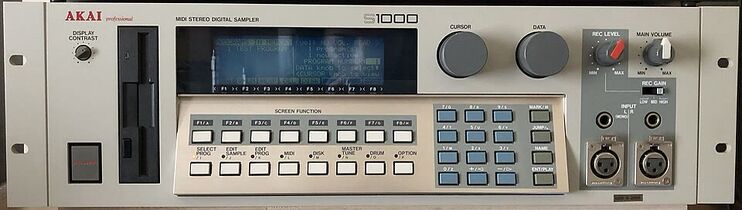 The Akai S1000 16-bit sampler, famous for its cyclical time-stretching algorithm.
-
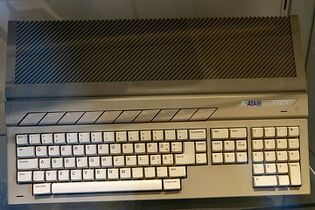 The Atari 1040ST, standard MIDI sequencing computer in early UK studios.
-
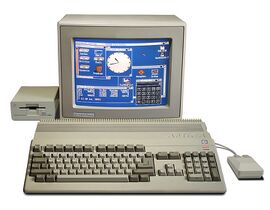 The Commodore Amiga 500, used with tracker software like OctaMED by producers such as Omni Trio and DJ Zinc.
-
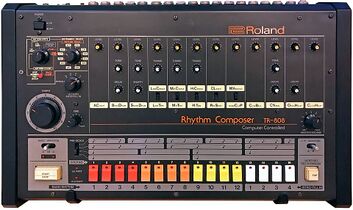 The Roland TR-808, whose pitched-down bass drum provided foundational sub-bass lines.


Early 1990s jungle production was shaped directly by the capabilities and memory constraints of affordable studio hardware[32][33]. A standard studio configuration consisted of an Atari ST microcomputer running MIDI sequencing software such as Steinberg Cubase or C-Lab Notator, linked to rack-mounted digital samplers such as the 12-bit Akai S950 or the 16-bit Akai S1000 and S3000 series[34][35][33]. Because early samplers offered limited RAM—often under two megabytes—producers frequently sampled breaks at lower rates or pitched vinyl records up to 45 RPM before sampling, imparting a gritty, bandwidth-limited high-frequency sheen and audible aliasing artifacts[32].
A defining sound-design technique of the era was cyclical time-stretching on Akai S950, S1000, and S3000 hardware, which altered a sample's duration independently of its pitch by repeating tiny slices of audio[34][36]. Pushing this algorithm to extremes produced metallic, phase-warped percussive textures and fluttering vocal elongations[37][36]. Goldie, working with Mark Rutherford and DJ Freebase under the name Metalheads, brought this effect to prominence on the 1992 darkcore single "Terminator"[38][37][39].
Alongside Atari-and-Akai rigs, a substantial cohort of UK producers—including Bizzy B, Urban Shakedown, Omni Trio, DJ Zinc, and Paradox—composed tracks using tracker software such as OctaMED on Commodore Amiga 500 and 1200 home computers[41][42][43]. Urban Shakedown famously synchronized two Amiga 500 units running MED 3.0 to produce their 1992 UK Top 40 breakbeat hardcore hit "Some Justice," while Rob Haigh (Omni Trio) relied on OctaMED for early jungle singles including "Renegade Snares" (1993)[44][41][43]. Trackers entered notes and sample-offset commands in vertical hexadecimal columns, making granular breakbeat slicing and rapid snare retriggers straightforward even without expensive outboard gear[42][43].
Mixing consoles played an equally active role in sound design. Producers routinely routed samplers, synthesizers such as the Roland JV-1080, and E-mu E4 series samplers through compact analog mixers—most notably the Mackie CR-1604 and Mackie 8-Bus desks—driving channel preamps past nominal levels to achieve warm analog clipping and punchy midrange distortion[34][36]. In bass synthesis, producers paired pure sine waves and pitched-down Roland TR-808 bass drum samples with aggressive midrange timbres[25]. One of the genre's most enduring bass timbres, the "Reese bass," originated from a detuned, phasing synthesizer patch created by Detroit techno producer Kevin Saunderson on "Just Want Another Chance" (1988)[45][46]. When Ray Keith (as The Renegade, with uncredited engineering by Nookie) sampled and filtered Saunderson's bass tone over an isolated Amen break on "Terrorist" (1994), the sound became a foundational template for both jungle and later drum and bass[47][48][49].

By the late 2010s and 2020s, revivalist producers employed both vintage hardware workflows (such as Amiga trackers and Akai rack samplers) and digital audio workstations including FL Studio, Ableton Live, and the modern tracker Renoise, often recreating 1990s sampling artifacts and console saturation digitally[15][50][32][51].
Arrangement, basslines, and dub aesthetics
Structurally, jungle tracks are built around a rhythmic dualism that musicologists and producers often describe as "double-time/half-time" tension[52][53]. While upper-register breakbeats rush at 150–170 BPM, basslines typically move at half tempo (effectively 75–85 BPM), drawing directly from Jamaican reggae and dub bass phrasing[1][52]. This duality allows dancers to lock into either the frantic snare-and-hi-hat subdivisions or the slower, swaying bass pulse[52].
Arrangements frequently open with extended, drumless introductions lasting 32 to 64 bars, establishing atmosphere through dub sirens, cinematic dialogue samples, jazz chords, ambient synthesizer pads, or ragga vocal acapellas before the drums and sub-bass enter at the drop[54][55]. Dub studio production methods—including spring reverb tails, tape-style feedback delays, abrupt muting of drum stems, vinyl backspins, and sound-clash vocal drops—are embedded throughout the arrangement to build tension and cue DJ rewinds[5][1][55]. Tracks such as "Burial" (1994) by Leviticus—an alias of Jumpin Jack Frost engineered by Dillinja and Optical—illustrate how mid-1990s producers juxtaposed contrasting sonic moods, combining dubwise sub-bass, ragga toasting, soulful female vocal hooks, and jazz-funk bass phrases within a single arrangement[56][52][55].

History and evolution
Precursors and emergence from breakbeat hardcore (1990–1993)

Jungle emerged from the fragmentation of the United Kingdom's late-1980s acid house and rave movement[58][4]. Between 1990 and 1992, British rave producers began accelerating house and techno tempos while substituting or layering four-on-the-floor drums with hip-hop-derived breakbeats, producing a hybrid known as breakbeat hardcore[22][59]. Labels such as Shut Up and Dance—which paired rave rhythms with Jamaican-inflected MCing on the Ragga Twins' 1990 single "Illegal Gunshot / Spliffhead"—alongside 4hero's Reinforced Records (founded 1989), Rob Playford's Moving Shadow (founded 1990), and Suburban Base Records established an independent studio network across London and surrounding towns[60][49][61][62]. Concurrently, former acid house pioneer A Guy Called Gerald relocated from Manchester to London and began experimenting with raw, stripped-back breakbeats and deep sub-bass[17].
One of the earliest records widely cited by electronic music historians as a proto-jungle blueprint is Lennie De Ice's "We Are I.E."[63][5]. Recorded in 1988–1989 and released in 1991 through Reel 2 Reel Productions and I.E. Records—labels operating out of East London's De Underground record shop in Forest Gate—the track combined a sped-up Amen break, a ragga-style sub-bassline, vinyl spinbacks, gunshot effects, a synth riff from 808 State's "Fire Cracker," and a vocal phrase sampled from the Algerian raï track "N'Sel Fik" by Chaba Fadela and Cheb Sahraoui[63][5][64].

In the same year, former hip-house artist Rebel MC released his second album, Black Meaning Good (1991), collaborating directly with Jamaican reggae and dancehall vocalists including Barrington Levy, Tenor Fly, and Dennis Brown[20]. Singles such as "The Wickedest Sound" and "Tribal Base" fused breakbeat hardcore tempos with sound-system basslines and authentic reggae vocals, while Rebel MC's subsequent anonymous white-label releases on his X Project imprint moved fully into early jungle[20].

By late 1992, the UK rave scene fractured into distinct camps. While one faction pursued euphoric, piano-led styles that evolved into happy hardcore, a darker counter-movement known as darkcore (or "darkside") emerged in London clubs such as Rage at Heaven[66][59]. Driven by producers including 4hero, Goldie (Rufige Kru / Metalheads), Doc Scott, DJ Hype, and Origin Unknown, darkcore stripped away upbeat rave pianos in favor of horror-film dialogue, reversed samples, dissonant synth stabs, heavier sub-bass, and increasingly intricate breakbeats[17][59]. By 1993, as darkcore's ominous minimalism merged with Jamaican dub basslines and ragga vocal samples, a recognizable jungle style crystallized[19][59].
Peak era and mainstream crossover (1994–1995)

Between 1994 and 1995, jungle reached a commercial and cultural peak in the United Kingdom, a period chronicled in the music press as the "Summer of Jungle"[7][8]. Sound systems playing jungle dominated the August 1994 Notting Hill Carnival, major compilation series such as Jungle Mania and Jungle Hits achieved strong retail sales, and Channel 4 aired the documentary All Junglists: A London Som'ting Dis in 1994[7][8]. Having previously relied almost entirely on unlicensed pirate radio, jungle gained regular legal broadcasting platforms when London's Kiss 100 launched its Givin' It Up show in early 1994—featuring rotating sets from Kenny Ken, Jumpin Jack Frost, Fabio, Grooverider, LTJ Bukem, Randall, DJ Rap, and Micky Finn—followed in 1995 by BBC Radio 1's weekly national program One in the Jungle[7].
Ragga jungle singles spearheaded the genre's entry into the UK Singles Chart[67][7]. In 1994, 18-year-old London producer Shy FX partnered with vocalist UK Apache (Abdul Wahab Lafta) on "Original Nuttah," issued by Sound of the Underground Records (S.O.U.R.)[67][54][19]. Featuring a minute-long introduction built solely around an echoing siren and UK Apache's rapid, stylistically shifting ragga delivery—which transitioned from Jamaican patois to mock-Cockney spoken asides—over a uniquely shuffled Amen break that placed a snare hit on the first beat, the track peaked at number 39 on the UK Singles Chart in October 1994[54][68].

Even greater chart visibility arrived with "Incredible" by producer M-Beat featuring dancehall vocalist General Levy on Renk Records[69]. Initially reaching number 39 upon its June 1994 release, a remixed reissue in August 1994 climbed to number 8 on the UK Singles Chart and spent twelve weeks in the Top 75, becoming the first jungle track to reach the UK Top 10[69][8]. However, the single also exposed internal fractures within the underground community. After General Levy was quoted in The Face magazine claiming to be "running jungle," an informal coalition of influential DJs and promoters dubbed the "Jungle Committee" organized a boycott of the record and associated bookings, arguing that mainstream media figures were misrepresenting a collective underground movement[70][71][7]. Levy maintained that his remarks had been taken out of context, and retrospective commentators have noted that the controversy inadvertently sidelined M-Beat's studio career despite his established standing on the Renk label[72][7][73].

Divergence into drum and bass (1995–1999)

From late 1994 through 1997, many producers moved away from the ragga-vocal template that had dominated commercial jungle, criticizing a perceived flood of formulaic imitations[8][74]. Music historian Martin James noted in State of Bass that figures such as Moving Shadow's Rob Playford expressed frustration with derivative ragga tracks, while club promoters and artists simultaneously confronted negative UK tabloid reporting that associated the word "jungle" with violence[8][74][8]. At Monday night club Speed at Mars Bar (founded in October 1994 by LTJ Bukem, Fabio, and Kemistry & Storm) and Goldie's Sunday Sessions at the Blue Note in Hoxton Square (launched in July 1995), DJs cultivated an experimental, listening-oriented identity increasingly marketed as "drum and bass"[23][75][76].
A pivotal marker of this artistic expansion was Goldie's debut studio album Timeless (August 1995, FFRR Records), which reached number 7 on the UK Albums Chart[77][23]. Engineered by Rob Playford, its 21-minute title suite and lead single "Inner City Life" (released in November 1994 and peaking at number 39 in the UK) merged layered jungle breakbeats and deep sub-bass with orchestral string arrangements, ambient textures, and soul vocals by Diane Charlemagne[77][78][79].

Equally consequential was a structural transformation in drum programming. Released on Metalheadz in 1995, Alex Reece's "Pulp Fiction" abandoned densely chopped Amen breaks in favor of a sparse, rolling "two-step" drum pattern—placing kicks and snares cleanly to create a streamlined, danceable pulse—paired with a warm bassline and minimal jazz horn stabs[10][80]. Producers and DJs including Fabio and Phil Wells later cited "Pulp Fiction" as a turning point that opened the door to faster tempos (170–180 BPM) and cleaner studio production[3][10]. Over the next three years, Bristol collective Roni Size & Reprazent won the 1997 Mercury Music Prize for their jazz-and-hip-hop-inflected album New Forms, while London labels such as No U-Turn and Virus steered club music toward synthesis-heavy, sci-fi-inflected techstep[81][82][11]. Music educators and analysts have observed that this transition involved not only a shift in subgenres, but a methodological shift from sample-and-collage breakbeat construction toward tightly synthesized drums and basslines[9][11].

Underground continuity and the 2010s–2020s revivals
Although mainstream drum and bass largely moved away from chopped funk breaks and ragga aesthetics in the late 1990s and early 2000s, jungle persisted through dedicated underground networks[83][11]. In the United Kingdom, labels such as Inperspective Records, Paradox Music, Bassbin, and Equinox's Scientific Wax championed an intricate, breakbeat-centric style often termed "drumfunk," preserving the micro-edited Amen break traditions of 1994–1996[13][84][83]. Equinox's "Acid Rain," originally crafted in 1996 and issued in 2004 on Inperspective Records alongside a widely played remix by Breakage, exemplifies this 2000s breakbeat preservation[85][83]. Simultaneously, ragga jungle experienced a resurgence across North America and Europe through labels like Rewind Records, Tigerbeat6, and Congo Natty's continuing output[86][87].

During 2012 and 2013, renewed interest in 1990s UK rave and pirate-radio aesthetics surfaced across house, techno, and post-dubstep club circuits[88][89]. Leeds producer Paul Woolford, recording under the alias Special Request, drew critical attention with his 2013 Houndstooth album Soul Music, which explicitly referenced illicit FM broadcasts by passing aggressive jungle breakbeats and rave riffs through an FM transmitter and re-sampling the broadcast[88][90]. Concurrently, UK bass producers began synthesizing 160 BPM Chicago footwork with early jungle breakbeats[53].
Between 2017 and 2025, a full-scale revival brought jungle back to international prominence across both underground club networks and mainstream festivals[14][15][91]. East London producer and DJ Tim Reaper became a focal figure of this wave, releasing prolific 1990s-indebted yet sharply engineered jungle via his Globex Corp series with Dwarde (launched in 2016) and his label Future Retro London (founded in 2020), which won Breakthrough Label at DJ Mag's 2021 Best of British Awards[15][92][93]. In September 2024, Tim Reaper and Australian producer Kloke released In Full Effect, the first jungle album issued by the influential London electronic label Hyperdub[92][93]. Alongside him, Norwich-based producer Sully earned widespread acclaim for meticulous, emotionally stark breakbeat compositions on labels such as Astrophonica, Uncertain Hour, and Over/Shadow, later scoring a UK Top 40 single with "Model Collapse" in 2025[14][94]. Artists including Coco Bryce (Myor Massiv), Dead Man's Chest, Ricky Force, Kid Lib, Fracture, and DJ Sherelle further expanded the revival across Europe, North America, and Asia[15][95][91].


In the early 2020s, a parallel crossover wave blended jungle breakbeats with indie songwriting, neo-soul vocals, and pop structures, reaching younger audiences through streaming platforms and social media[97][98]. Bradford-born, Leeds-raised singer, producer, and DJ Nia Archives emerged as a leading exponent of this movement via her imprint HIJINXX[99][98]. Beginning with the 2020 track "Sober Feels" and the EPs Headz Gone West (2021) and Forbidden Feelingz (2022), followed by her Mercury Prize-shortlisted debut album Silence Is Loud (2024), she explicitly cited Black British jungle pioneers such as Kemistry & Storm while introducing vocal-driven jungle to mainstream audiences, earning three career BRIT Award nominations between 2023 and 2025[99][16][98].

Regional scenes and key labels
London, Bristol, and United Kingdom networks
London served as jungle's primary crucible, structured around neighborhood record shops, independent studio hubs, and local pirate transmitters[5][6][70]. East London and surrounding Essex towns anchored the raw hardcore-to-jungle axis through Forest Gate's De Underground record shop and upstairs studio (connected to Mike De Underground, Cool Hand Flex, Uncle 22, and Randall) and Romford's Suburban Base Records[5][101]. In North-West London, Dollis Hill housed 4hero's Reinforced Records, whose roster also released rare-groove-sampling dancefloor jungle under the Tom & Jerry alias, while Stevenage hosted Rob Playford's Moving Shadow—home to Omni Trio, Deep Blue, Foul Play, Dead Dred, and Ray Keith's Renegade alias[44][102][7][47][61][62]. Other central London labels included Bryan Gee and Jumpin Jack Frost's V Recordings and its Philly Blunt subsidiary, Goldie and Kemistry & Storm's Metalheadz, LTJ Bukem's Good Looking Records, DJ Hype's Ganja Records, Renk Records, S.O.U.R., Ibiza Records, Kemet, and Congo Natty[19][55][23][7][19].

Outside the capital, Bristol developed a distinct regional identity rooted in its established Afro-Caribbean sound-system heritage, post-punk dub experimentation, and hip-hop crews such as The Wild Bunch and production duo Smith & Mighty[103][104][105]. Roni Size, DJ Krust, DJ Die, and Suv—who met through Bristol sound systems, pirate stations like FTP and Bad Radio, and the 1990 Glastonbury Festival—launched Full Cycle Records in 1993 and forged a tight alliance with London's V Recordings[106][104][107][105]. Critics and peers distinguished the "Bristol sound" for its warm, rolling sub-bass, dub-derived spaciousness, and jazz-funk musicality—qualities evident on Roni Size's 1994 single "It's a Jazz Thing" and later on the Reprazent collective's releases[106][108][109]. Significant regional scenes also operated in Ipswich (home to Photek), Coventry, Birmingham, Manchester, and Leeds[110][105].

North America and international scenes
Outside the United Kingdom, Toronto developed the largest jungle and drum and bass infrastructure in North America during the mid-to-late 1990s[113][12]. Supported by a large Jamaican-Canadian diaspora, specialty vinyl shops such as Play De Record and Eastern Bloc, and extensive mixtape distribution networks, the city fostered dedicated all-jungle promotion crews such as Marcus Visionary's Delirium and long-running club residencies including Syrous and Renegades at Turbo[113][114][12]. Local DJs, producers, and MCs—including Mystical Influence and DJ Sniper (founders of Vinyl Syndicate in 1996), Marcus Visionary, Freaky Flow, Capital J, and Lush—hosted UK headliners while cultivating a regional style heavy on jump-up and ragga jungle[113][12].
In the United States, specialized jungle scenes coalesced in cities with existing rave, hip-hop, and techno infrastructures. Detroit developed an abrasive, hardware-driven ragga jungle outpost centered around record-shop owner Todd Osborn (recording as Soundmurderer) and Tadd Mullinix (SK-1), whose Rewind Records 12-inch releases—later compiled by Richard D. James' UK label Rephlex in 2003—fused frantic Amen break chopping with Jamaican dancehall and hip-hop vocal samples[115][86][87]. Los Angeles became a notable center for West Coast ragga jungle through DJs and producers such as R.A.W. (B-Boy 3000), while Philadelphia and New York supported east-coast jungle and drum and bass crews[116]. Across Europe and Asia, dedicated followings took hold in the Netherlands (later home to revivalist Coco Bryce's Myor Massiv), Germany, France, Poland, Australia, and Japan, where labels and clubs regularly imported UK dubplates and hosted tours by British artists[15][117][118].
Subgenres and fusion styles
Ragga jungle and darkside
Ragga jungle represents the strand of jungle most explicitly rooted in Jamaican dancehall and dub sound-system traditions[1][74]. Emerging alongside early jungle in 1992–1994 through artists such as Congo Natty (Rebel MC), Shy FX, Remarc, M-Beat, Conquering Lion, and Krome & Time, it centers on patois toasting, reggae vocal hooks, basslines patterned after classic dancehall riddims (such as the "Sleng Teng" or "Real Rock" rhythms), airhorn blasts, and soundclash bravado[29][68][52][20]. While its popularity fueled jungle's 1994 UK chart breakthrough, its reliance on overt dancehall tropes also sparked debate among producers seeking more abstract instrumental directions[74].
Darkside (closely linked to darkcore) offered a bleaker, urban-dystopian counterweight, originating in late 1992 and running alongside ragga jungle through 1994[17][59]. Characterized by ominous minor-key strings, distorted Reese and Hoover-derived basslines, industrial sound effects, and eerie cinema dialogue, darkside prioritized claustrophobic tension over celebratory dancehall energy[59]. Key recordings included early Metalheads releases, 4hero's Reinforced output, and Dead Dred's 1994 Moving Shadow single "Dred Bass," which paired reggae vocal samples with a stark, churning bassline and clipped percussion[102][17][59].
Atmospheric and intelligent jungle

Developing concurrently between 1992 and 1996, atmospheric jungle—frequently termed "ambient jungle" or "intelligent jungle" by mid-1990s music journalists—contrasted ragga jungle's vocal density and darkside's aggression with expansive synthesizer pads, lush reverb, jazz-fusion chords, and Detroit techno melodic motifs[8][120][121]. Spearheaded by LTJ Bukem and his Good Looking Records imprint (launched with 1992's "Demon's Theme"), alongside artists such as Omni Trio, PFM, Peshay, Source Direct, and Photek, the style emphasized long-form DJ mixing and home-listening depth[8][121][117][122]. Producers associated with the movement, including Bukem himself, frequently expressed discomfort with the press-coined label "intelligent jungle," noting that it unfairly implied other branches of jungle—particularly Black-led ragga styles—were unintelligent [citation needed].
Apollo Two's 1993 Good Looking Records single "Atlantis (I Need You)" (remixed by LTJ Bukem) exemplifies this melodic cross-pollination, sampling a synth motif from Detroit techno outfit Reel By Real's "Surkit," underwater film dialogue from James Cameron's The Abyss (1989), and soulful vocal refrains over crisp, rolling breakbeats[123][120]. By 1995–1996, producers like Photek (on singles such as "The Seven Samurai") and Source Direct (on "Secret Liaison") pushed atmospheric and jazz-influenced jungle toward minimalist, architecturally programmed "fractal" breakbeats that bridged jungle and experimental drum and bass[124][110][122].

Hardstep, jump-up, and footwork jungle
As jungle mutated in 1995–1996, several dancefloor-oriented offshoots emerged. Hardstep, associated with labels such as Hardleaders and DJs like Grooverider, retained gritty breakbeats and heavy sub-bass while adopting a starker, punchier kick-and-snare cadence designed for cavernous club systems[125][11]. Jump-up, popularized by producers including Aphrodite, Micky Finn, and DJ Zinc (whose 1995–1996 OctaMED-composed single "Super Sharp Shooter" became a major club staple), emphasized bouncy, exaggerated basslines, hip-hop vocal hooks, and accessible, party-focused arrangements[41][43][19][11].
A notable twenty-first-century fusion style, footwork jungle, arose between 2010 and 2013 after UK electronic labels such as Planet Mu introduced Chicago's 160 BPM footwork scene to British club producers[53][126]. Recognizing the shared tempo and polyrhythmic syncopation between 1990s jungle and Chicago footwork, London producer Jim Coles (Om Unit) circulated influential anonymous bootlegs under the alias Philip D Kick in 2011 that reworked classic jungle tracks with footwork drum programming[53][127]. Soon after, producers including Fracture, Machinedrum, Sam Binga, and labels such as Exit Records, Astrophonica, and Cosmic Bridge codified the hybrid—combining chopped Amen and Think breaks with sparse 808 kicks, triplet hi-hats, clipped claps, and rapid-fire vocal loops[53][127]. Fracture's 2012 Exit Records single "Get Busy" (featuring his Dawn Day Night alias) became a defining club template for the 160 BPM footwork-jungle crossover[128][129][126].

Cultural impact and club culture
Jungle's rapid evolution during the early 1990s depended on an informal, self-sustaining infrastructure modeled directly on British Caribbean sound-system culture[2][131]. Unlicensed pirate radio stations formed the genre's primary broadcast network across London and surrounding regions[132][23]. Established on 28 November 1991 by Eastman and Smurf on 94.5 FM (later 94.6 FM) from Hackney, Kool FM became the longest-running and most influential jungle station—described by Simon Reynolds as "London's ruling pirate station" and by Martin James as "the single most important pirate station in jungle"—providing regular airtime to DJs and MCs including Brockie, Det, DJ Ron, Nicky Blackmarket, Stevie Hyper D, and Skibadee while evading Department of Trade and Industry (DTI) transmitter raids[132][133][6][2]. Neighboring stations such as Rush FM, Don FM (founded November 1992 in Wandsworth), and Rinse FM (founded 1994, which later acquired and relaunched Kool FM in 2023) similarly disseminated new white labels and dubplates, while listeners recorded broadcasts onto cassette tapes that circulated nationally[132][133][6][23].
Exclusive dubplate culture accelerated stylistic innovation week by week[134][131]. Adapting a Jamaican sound-clash practice pioneered by engineers like King Tubby, jungle producers recorded unfinished tracks onto Digital Audio Tape (DAT) and queued at London cutting houses—most prominently Music House on Holloway Road in North London and JTS Studio in East London—to have one-off 10-inch acetate discs cut for immediate club testing[135][134][136]. Because acetates degraded after roughly thirty to fifty plays and vinyl pressings could take months, top DJs competed fiercely to debut exclusive dubplates and custom "VIP" (Variation in Production) mixes[137][131][138]. Inside the dance, MCs played an integral musical role—bridging reggae toasting and double-time UK rapping, with performers such as MC GQ, MC Moose, MC 5ive-0, MC Det, and Stevie Hyper D guiding crowd energy and calling for the "rewind" (or "pull-up"), in which a DJ spun a record backward and restarted an especially popular drop from the beginning[139][140][23][18].
The genre's live culture developed across both large-scale raves and intimate inner-city clubs. Early breakbeat hardcore and jungle took shape at London institutions such as Labyrinth in Dalston, Fabio and Grooverider's Thursday residency Rage at Heaven under Charing Cross, AWOL (A Way of Life) at the Paradise Club in Islington, Roast at the Astoria, Jungle Splash at Roller Express, and large raves including Telepathy, World Dance, and One Nation[23][74][66]. Following the passage of the United Kingdom's Criminal Justice and Public Order Act 1994—whose Section 63 specifically targeted unlicensed open-air gatherings playing music characterized by "a succession of repetitive beats"—dance culture shifted decisively from rural free parties into licensed urban nightclubs, reinforcing the centrality of smaller, sound-system-focused rooms such as Speed and the Blue Note[66][141][142][58].
In cultural criticism, jungle is widely analyzed as an expression of working-class multicultural Britain, uniting Black British Caribbean heritage, white working-class rave culture, and South Asian and mixed-heritage participants in shared urban spaces[54][21][143]. Simon Reynolds coined the concept of the "hardcore continuum" to describe the unbroken structural, social, and sonic lineage stretching from early 1990s rave and jungle into UK garage, 2-step, grime, dubstep, and UK funky—genres that all inherited jungle's reliance on pirate radio, dubplate exclusivity, MC hosting, rewinds, and sub-bass-heavy sound design[144][18][145][4]. Beyond club music, jungle's breakbeat vocabulary influenced mainstream rock and pop acts during the late 1990s—including David Bowie's 1997 album Earthling—and continued to shape electronic music, video game soundtracks, and global club production into the 2020s[23][110][16].
See also
- Amen break
- Breakbeat hardcore
- Drum and bass
- Dubplate
- Hardcore continuum
- Pirate radio in the United Kingdom
- Ragga jungle
- Reese bass
Bibliography
Books and documentaries
- Belle-Fortune, Brian. All Crews: Journeys Through Jungle / Drum & Bass Culture.
- James, Martin. State of Bass: The Origins of Jungle/Drum & Bass.
- Reynolds, Simon. Energy Flash: A Journey Through Rave Music and Dance Culture.
- All Junglists: A London Som'ting Dis (Channel 4 television documentary, 1994).
Articles, interviews, and discographical databases
- Clash Magazine. "Seven Jungle Artists Carrying The Torch For The NewGen" (May 2024).
- Discogs release entries for Lennie De Ice (We Are I.E.), Rebel MC (Tribal Base), Metalheads (Terminator), Deep Blue (The Helicopter Tune), Apollo Two (Volume 1), The Renegade featuring Ray Keith (Terrorist), Leviticus (Burial), UK Apache with Shy FX (Original Nuttah), M-Beat featuring General Levy (Incredible), Roni Size (It's a Jazz Thing), Goldie presents Metalheadz (Inner City Life), Remarc (R.I.P.), Alex Reece (Pulp Fiction), Soundmurderer & SK-1 (Call Da Police), Equinox (Acid Rain), Fracture featuring Dawn Day Night (Get Busy), Sully (Swandive), and Nia Archives (Forbidden Feelingz).
- Fact Magazine. "The 20 best jungle records ever made" (February 2011); "The 14 pieces of software that shaped modern music" (October 2016).
- Fintoni, Laurent. "Interview: Bristol's DJ Krust." Red Bull Music Academy Daily (March 2015).
- The Guardian. "From the Dug Out and dreads to DMZ and dubstep: 10 classic club nights" (December 2011); Reynolds, Simon, "Notes on the noughties: Grime and dubstep – a noise you could believe in" (January 2010).
- The Independent. "Interview: DJ Rap - Out of the jungle" (September 1998).
- Kmag. "Tunes That Shaped D&B... Original Nuttah" (December 2009); "Bleep, bass & breaks: the real roots of jungle" (January 2020).
- NME. "Nia Archives – 'Forbidden Feelingz' EP review" (March 2022).
- Red Bull Music Academy Daily. "Flashdance: Footwork And the Future" (May 2012); "Dubplate Culture: Analogue Islands in the Digital Stream" (October 2014).
- Resident Advisor. Artist profiles, label reviews, and news coverage of Shy FX, Exit Records, Sully, and Nia Archives.
- UKF. "Forever in flipmode: An Astrophonic conversation with Fracture" (December 2018); "In Conversation With Tim Reaper" (August 2020); "BHM: State Of Bass" (October 2024).
- VICE. "Jungle's Still Massive: Why is General Levy's 'Incredible' So Popular 20 Years On?" (September 2015); "Megadrive to Mega Hit: Why Video Games Are So Tied to Club Music" (October 2018).
- Wax Poetics. Terzulli, Paul. Oral histories of "Original Nuttah" and "Pulp Fiction."
- The Wire. Reynolds, Simon. "The Wire 300: Simon Reynolds on the Hardcore Continuum" (2009–2013).
</USER_REQUEST> <ADDITIONAL_METADATA> The current local time is: 2026-11-22T15:49:12+03:00. </ADDITIONAL_METADATA>
References
- ↑ 1,00 1,01 1,02 1,03 1,04 1,05 1,06 1,07 1,08 1,09 1,10 1,11 1,12 Jungle Music: Jungle Is A Genre of Electronic Music That Developed in England – PDF – Popular Music – Electronic Music
- ↑ 2,0 2,1 2,2 DJ Ital Official – Jungle & D&B Pioneer & Vital Fest
- ↑ 3,0 3,1 3,2 Drum and bass
- ↑ 4,0 4,1 4,2 New Era Jungle
- ↑ 5,0 5,1 5,2 5,3 5,4 5,5 5,6 5,7 5,8 Lennie De Ice – We Are i.e.
- ↑ 6,0 6,1 6,2 6,3 Kool FM - Wikipedia
- ↑ 7,00 7,01 7,02 7,03 7,04 7,05 7,06 7,07 7,08 7,09 Jungle music - Wikipedia
- ↑ 8,00 8,01 8,02 8,03 8,04 8,05 8,06 8,07 8,08 8,09 8,10 State of Bass: The Origins of Jungle/Drum & Bass 9781913231026 - DOKUMEN.PUB
- ↑ 9,0 9,1 what is the difference between jungle and drum (reddit.com)
- ↑ 10,0 10,1 10,2 10,3 Alex Reece - Pulp Fiction
- ↑ 11,0 11,1 11,2 11,3 11,4 11,5 11,6 can someone provide examples of protodnb before (reddit.com)
- ↑ 12,0 12,1 12,2 12,3 watch (youtube.com)
- ↑ 13,0 13,1 Inperspective Records (Discogs)
- ↑ 14,0 14,1 14,2 14,3 Sully (music producer) - Wikipedia
- ↑ 15,0 15,1 15,2 15,3 15,4 15,5 Tim Reaper - Wikipedia
- ↑ 16,0 16,1 16,2 Nia Archives' new single is inspired by jungle and '90s breakbeat · News ⟋ RA
- ↑ 17,0 17,1 17,2 17,3 17,4 Bleep, bass & breaks: the real roots of jungle
- ↑ 18,0 18,1 18,2 notes noughties grime dubstep (theguardian.com)
- ↑ 19,0 19,1 19,2 19,3 19,4 19,5 19,6 19,7 19,8 What Is Jungle Music? History, Sound & Essential Tracks
- ↑ 20,0 20,1 20,2 20,3 20,4 watch (youtube.com)
- ↑ 21,0 21,1 21,2 9781526131249.00012 (manchesterhive.com)
- ↑ 22,0 22,1 22,2 22,3 22,4 All Crews: Journeys Through Jungle / Drum & Bass Culture 0954889703, 9780954889708 - DOKUMEN.PUB
- ↑ 23,0 23,1 23,2 23,3 23,4 23,5 23,6 23,7 23,8 Drum & Bass Ghost Producer Tracks – EDM Ghost Production
- ↑ the amen break the most important drum loop in (reddit.com)
- ↑ 25,0 25,1 25,2 25,3 Drum and bass (culture.fandom.com)
- ↑ On the Beat with David Stanoch: Where Old School Meets New—The Timeless Rhythm of Clyde Stubblefield
- ↑ 27,0 27,1 27,2 27,3 Break (music) - Wikipedia
- ↑ Can I Get An Amen? The World’s Greatest Drum Loop Reaches Radio 4 – Robin The Fog
- ↑ 29,0 29,1 29,2 Remarc RIP Ice Cream Syrup (Discogs)
- ↑ 30,0 30,1 remarc r i p ice cream syrup 12 vinyl (earcandymusic.biz)
- ↑ 31,0 31,1 Deep Blue The Helicopter Tune (Discogs)
- ↑ 32,0 32,1 32,2 watch (youtube.com)
- ↑ 33,0 33,1 an ethnographic and technological study of breakbeats (raw.githubusercontent.com)
- ↑ 34,0 34,1 34,2 drum n bass must haves (reddit.com)
- ↑ before buying your next plugin daw or hardware (reddit.com)
- ↑ 36,0 36,1 36,2 how did 2000s era drum and bass producers compose (reddit.com)
- ↑ 37,0 37,1 37,2 Ten Records That Built Drum and Bass, 1992–2005 – Maxim Schunk
- ↑ 38,0 38,1 Forgotten Treasure: Metalheads "Terminator" (1992) – Music Is My Sanctuary
- ↑ Metalheads Terminator (Discogs)
- ↑ The 20 best jungle records ever made
- ↑ 41,0 41,1 41,2 OctaMED - Wikipedia
- ↑ 42,0 42,1 Megadrive to Mega Hit: Why Video Games Are So Tied to Club Music
- ↑ 43,0 43,1 43,2 43,3 Please add VST3 support - Page 3 - Ideas & suggestions - Renoise Forums
- ↑ 44,0 44,1 Omni Trio Vol 3 Renegade Snares (Discogs)
- ↑ Reese’s Pieces: How to Create Kevin Saunderson’s Legendary Bass Patch - Ali Jamieson
- ↑ sampling as an art a bit of detroit techno (dnb2day.ru)
- ↑ 47,0 47,1 47,2 The Renegade Featuring Ray Keith Terrorist Something I Feel (Discogs)
- ↑ Origins Of Sound: Der Reese-Bass - Bonedo
- ↑ 49,0 49,1 49,2 Beatport’s Definitive History of Drum & Bass
- ↑ watch (youtube.com)
- ↑ In Conversation With Tim Reaper • UKF
- ↑ 52,0 52,1 52,2 52,3 52,4 52,5 Forgotten Treasure: Leviticus “The Burial” (1995) – Music Is My Sanctuary
- ↑ 53,0 53,1 53,2 53,3 53,4 Footwork Jungle - Melodigging
- ↑ 54,0 54,1 54,2 54,3 54,4 Tunes That Shaped D&B... Original Nuttah - Kmag
- ↑ 55,0 55,1 55,2 55,3 55,4 dubwise vinyl 013leviticus burial (testpressing.org)
- ↑ Leviticus Burial (Discogs)
- ↑ Leviticus – Burial – All Night Flight Records
- ↑ 58,0 58,1 90s Rave Culture: Acid House, PLUR and the 1994 Rave Law
- ↑ 59,0 59,1 59,2 59,3 59,4 59,5 59,6 Darkcore
- ↑ Rebel MC Featuring Tenor Fly The Wickedest Sound (Discogs)
- ↑ 61,0 61,1 Reinforced Records - Wikipedia
- ↑ 62,0 62,1 Calaméo - Breakbeat Hardcore Vinyl 1991-1993. Visual Research & Catalog.
- ↑ 63,0 63,1 63,2 We Are I.E. - Wikipedia
- ↑ Various We Are IE (Discogs)
- ↑ Rebel MC Featuring Tenor Fly Barrington Levy Tribal Base (Discogs)
- ↑ 66,0 66,1 66,2 classic club nights (theguardian.com)
- ↑ 67,0 67,1 Original Nuttah - Wikipedia
- ↑ 68,0 68,1 Original Nuttah – DJ Okkie
- ↑ 69,0 69,1 69,2 Incredible (M-Beat song) - Wikipedia
- ↑ 70,0 70,1 70,2 Jungle's Still Massive: Why is General Levy's "Incredible" So Popular 20 Years On?
- ↑ Interview: DJ Rap - Out of the jungle – The Independent – The Independent
- ↑ History Sessions: The Junglist Massive! (1994 – 1995) - A Bass Chronicle
- ↑ M-Beat - Artist Biographies - RollDaBeats Forum
- ↑ 74,0 74,1 74,2 74,3 74,4 BHM: State Of Bass • UKF
- ↑ DJ Randall & MC Justyce - Metalheadz - Bluenote - 14.6.98 by Rave Archive UK – Mixcloud
- ↑ Goldie and the Birth of Metalheadz – coldplaysucks.com
- ↑ 77,0 77,1 77,2 goldie (ronniescotts.co.uk)
- ↑ Goldie Presents Metalheads Inner City Life (Discogs)
- ↑ 79,0 79,1 Inner City Life - Wikipedia
- ↑ 80,0 80,1 Alex Reece – Biography – Drum & Bass UK
- ↑ Size, Roni – Encyclopedia.com
- ↑ What is Jungle Music? – The Evolution of Drum and Bass
- ↑ 83,0 83,1 83,2 83,3 a selection of some of my favourite drum and bass (reddit.com)
- ↑ watch (youtube.com)
- ↑ 85,0 85,1 ebay.co.uk
- ↑ 86,0 86,1 86,2 Album Review: Soundmurderer + SK-1 - Rewind Records
- ↑ 87,0 87,1 Soundmurderer (peel.fandom.com)
- ↑ 88,0 88,1 Review: Special Request: Soul Music - Inverted Audio
- ↑ best of 2013 top 25 albums (juno.co.uk)
- ↑ paul woolford special request interview (daily.redbullmusicacademy.com)
- ↑ 91,0 91,1 Tim Reaper ⟡ MixElle - Galeria Zé dos Bois
- ↑ 92,0 92,1 tim reaper mn0003646364 (allmusic.com)
- ↑ 93,0 93,1 Tim Reaper Real Name: Ed Alloh & the Jungle Revival
- ↑ 94,0 94,1 Seven Jungle Artists Carrying The Torch For The NewGen – Features – Clash Magazine Music News, Reviews & Interviews
- ↑ do they still make jungle music like back in the (reddit.com)
- ↑ Sully Swandive (Discogs)
- ↑ 97,0 97,1 forbidden feelingz nia archives 121150 (byte.fm)
- ↑ 98,0 98,1 98,2 Nia Archives: Real Name, Age and Mercury-Shortlisted Album
- ↑ 99,0 99,1 99,2 nia archives forbidden feelingz ep review jungle radar 3179138 (nme.com)
- ↑ Nia Archives Forbidden Feelingz (Discogs)
- ↑ Jungle - A Bass Chronicle
- ↑ 102,0 102,1 Dead Dred Dred Bass (Discogs)
- ↑ bristol drum n bass history (redbull.com)
- ↑ 104,0 104,1 gone to a rave with roni size (theransomnote.com)
- ↑ 105,0 105,1 105,2 dj krust interview 2015 (daily.redbullmusicacademy.com)
- ↑ 106,0 106,1 106,2 Roni Size (Discogs)
- ↑ Krust - Biography, Discography & Albums – Coda Music
- ↑ roni size reprazent new forms (bleep.com)
- ↑ the origin of sampled double bass (reddit.com)
- ↑ 110,0 110,1 110,2 Photek – Wikipedia
- ↑ Roni Size / DJ Die - It's A Jazz Thing (Electric Boogie Mix) / The Calling
- ↑ roni size it s a jazz thing the calling v recordings (htfr.com)
- ↑ 113,0 113,1 113,2 watch (youtube.com)
- ↑ Then & Now: Turbo - Then and Now: Toronto Nightlife HistoryThen and Now: Toronto Nightlife History
- ↑ SoundMurderer SK 1 Rewind Records (Discogs)
- ↑ spinscott 5 in 1 100 live jungle 2020 (reddit.com)
- ↑ 117,0 117,1 ltj bukem demons theme original 12 mix drum and (reddit.com)
- ↑ Tim Reaper Honors Jungle's Past—But He's More Interested in Its Future
- ↑ Soundmurderer SK 1 Call Da Police Deport Them Rewind Remix (Discogs)
- ↑ 120,0 120,1 120,2 An introduction to LTJ Bukem in 10 records — The Vinyl Factory
- ↑ 121,0 121,1 watch (youtube.com)
- ↑ 122,0 122,1 watch (m.youtube.com)
- ↑ 123,0 123,1 Apollo Two Volume 1 (Discogs)
- ↑ photek 7 samurai 736418 (hhv.de)
- ↑ hardstep (12edit.com)
- ↑ 126,0 126,1 126,2 Interview with Fracture
- ↑ 127,0 127,1 flashdance footwork future (daily.redbullmusicacademy.com)
- ↑ 128,0 128,1 Autonomic, jungle footwork and slow/fast: how drum’n’bass got its groove back - Fact Magazine
- ↑ Fracture 2 Feat Dawn Day Night Get Busy (Discogs)
- ↑ fracture get busy (bleep.com)
- ↑ 131,0 131,1 131,2 Dubplates explained: why a one-off acetate still matters
- ↑ 132,0 132,1 132,2 nBzFFibCmJY (youtube.com)
- ↑ 133,0 133,1 watch (youtube.com)
- ↑ 134,0 134,1 dubplate culture feature (daily.redbullmusicacademy.com)
- ↑ Dubplate - Wikipedia
- ↑ Music House Studio – Dub-Stuy
- ↑ Meet the studios keeping dubplate culture alive — The Vinyl Factory
- ↑ A Brief History of The Dubplate – Reggae Roast
- ↑ Stevie Hyper D & The Evolution of UK MCs
- ↑ Ty and the history of UK rap - Mixmag.net
- ↑ Criminal Justice and Public Order Act 1994 - Wikipedia
- ↑ the uk rave scene was so powerful the government (reddit.com)
- ↑ Hardcore Simon Reynolds - delpire & co
- ↑ The Wire 300: Simon Reynolds on the Hardcore Continuum #7: Grime (And A Little Dubstep) (2005) - The Wire
- ↑ Energy Flash